The Maltese Falcon is one of the most enduring symbols associated with the Maltese Islands. Originally rooted in a feudal tribute paid by the Knights of the Order of St. John to the Spanish crown, the falcon later evolved into a powerful cultural motif thanks to literature and cinema. Today, it stands as both a historical emblem and a legendary artifact of imagination.
A Symbolic Tribute: How the Maltese Falcon Tradition Began
1530: The Deed of Donation and the Knights’ New Homeland
The tradition of the Maltese falcon dates back to 1530, when Emperor Charles V granted the islands of Malta, Gozo and Tripoli to the Order of St. John. In exchange, the knights were required to offer an annual symbolic rent: one Maltese falcon trained in falconry, presented to the King of Spain.
This ritual was not merely ceremonial—it fulfilled a crucial political and legal function.
A Political Gesture Between Crown and Knights
The falcon tribute allowed:
- the Spanish crown to maintain symbolic ownership of Malta,
- while granting the Order a degree of autonomy,
- and securing a new territorial base after their expulsion from Rhodes.
The payment continued until 1798, when the French expelled the Order from Malta.
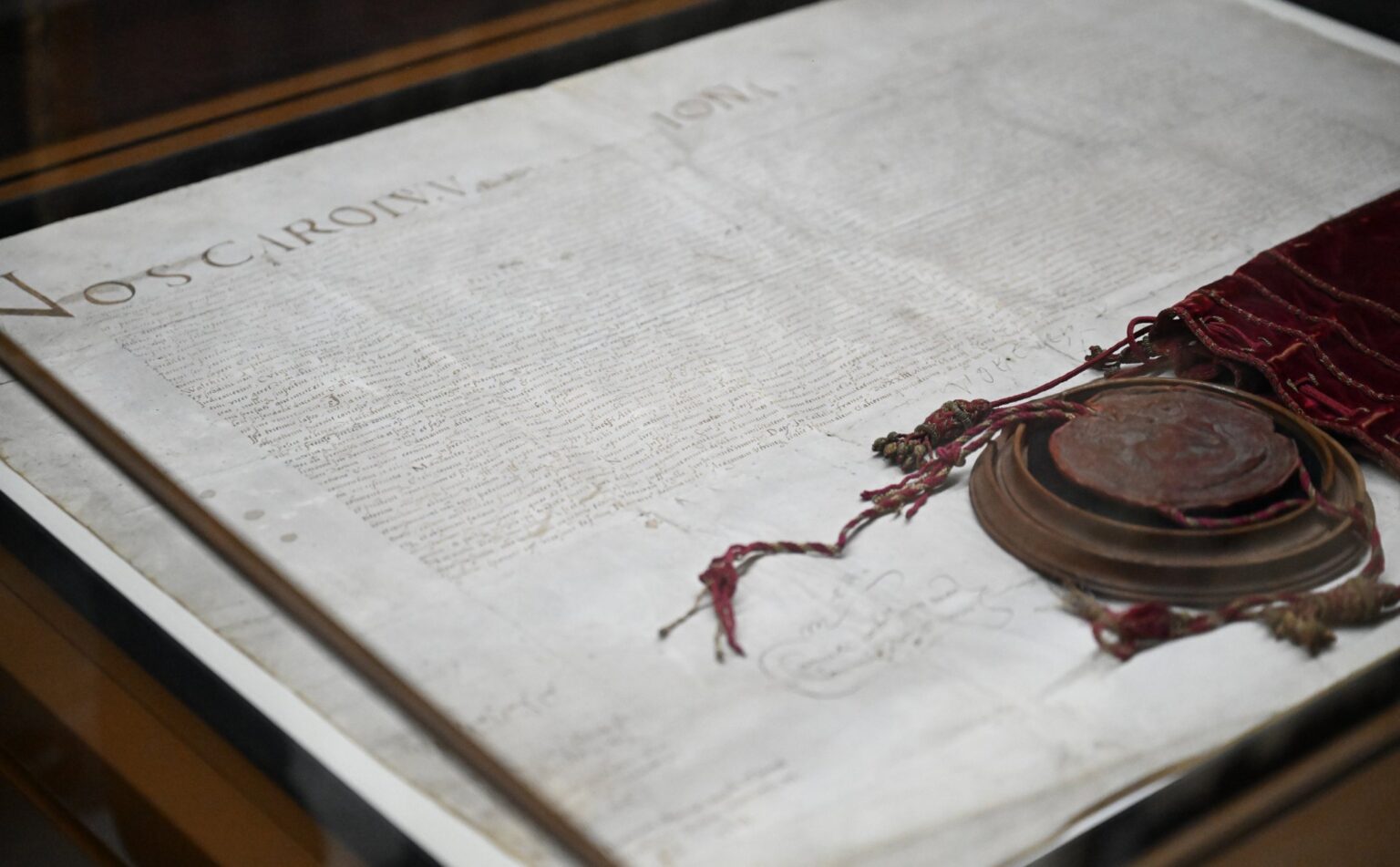
Deed of Donation of the islands of Malta, Gozo and Tripoli to the Order of St John by Emperor Charles V in 1530
The Knights of Malta: Heritage, Power, and Legacy
During their rule, the Knights defended Malta against the Ottoman Empire, notably during the Great Siege of 1565, founded the fortified capital city of Valletta, and left an indelible mark on Maltese architecture, culture, and identity.
Their emblem, the eight-pointed Maltese Cross, and the tradition of the falcon became symbols of prestige, sovereignty, and military heritage.
The Maltese Falcon in Literature and Film
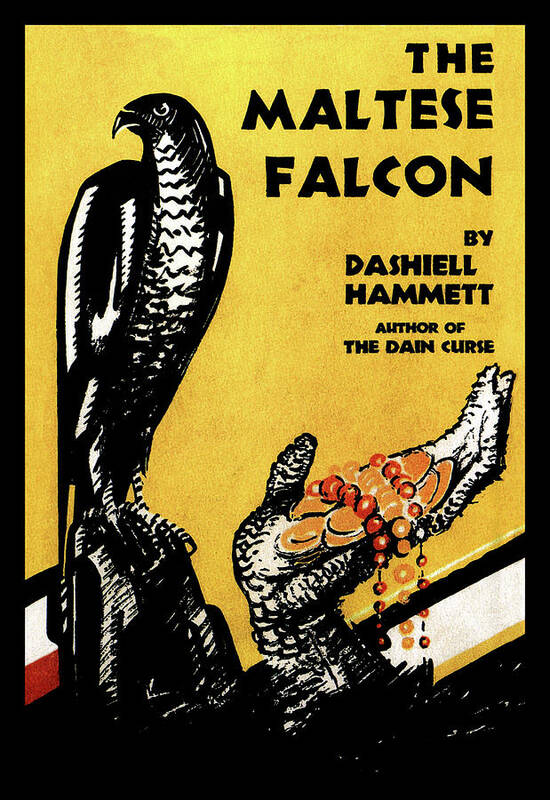
Dashiell Hammett’s Iconic Novel
The falcon gained worldwide fame thanks to Dashiell Hammett’s 1930 novel The Maltese Falcon, later adapted into classic films, including the 1941 version starring Humphrey Bogart.
In the story, the falcon is not a living bird but a mythical statuette, black-enamelled and inlaid with rare jewels. It becomes the object of obsession, greed, and betrayal — a symbol of wealth, illusion, desire, and human fallibility.
For Sam Spade and the other characters, the statuette embodies a dream they pursue at any cost… only to discover that it is a counterfeit.
Its hollowness highlights the novel’s deeper themes: deception, moral ambiguity, and the fragility of human ambition.
Symbolism of the Maltese Falcon in Hammett’s Story
The falcon in the novel represents covetousness, manipulation, illusion vs. reality, the unattainable ideal and the corrupting power of desire
It serves as a catalyst for human conflict, guiding the plot through lies, alliances, violence, and unexpected twists.
Are There Still Falcons in Malta Today?
Historically, Malta was home to peregrine falcons, relatives of the symbolic “Maltese falcon.” However, the species disappeared from the islands in the 1980s due to habitat loss and hunting.
Today:
- Malta is a major hub for migratory birds,
- several birds of prey can still be spotted during migration seasons,
- especially in nature areas such as Chadwick Lakes.
Although the iconic falcon no longer nests in Malta, its symbolic presence remains deeply embedded in Maltese memory.
A Lasting Emblem of Malta’s History and Imagination
The Maltese Falcon endures as a historical emblem of knighthood and feudal tradition, a reminder of Malta’s strategic past, and a cultural icon immortalised by literature and cinema.
From its origins as a political tribute to its transformation into a legendary treasure, the Maltese falcon continues to fascinate — a timeless symbol bridging history, myth, and storytelling.