A Distinctive Feature of Maltese Interiors
Cement tiles are one of the most striking and instantly recognisable elements found in the interiors of traditional Maltese homes. Colourful, patterned and durable, they form an essential part of the island’s architectural identity. Far more than a decorative detail, these tiles embody a craft tradition dating back to the 19th century, one that continues to shape both historic dwellings and contemporary renovations across Malta.
The Historical Origins of Cement Tiles
Cement tiles originated in mid-19th-century France, more precisely in Viviers, in the Ardèche region. Around 1850, public works contractor Étienne Larmande developed an innovative manufacturing process that allowed tiles to be produced without firing. Using a hydraulic press, he created a floor covering that was solid, colourful and highly decorative, offering a more affordable alternative to marble, granite or natural stone.
The invention was officially patented in September 1859 and quickly gained popularity, particularly in southern France. The tiles were showcased to a wider audience at the 1867 World’s Fair in Paris, where they were praised for their durability and aesthetic versatility. From there, the technique spread throughout Europe and into various Mediterranean regions and colonies — including Malta.
The Arrival and Adoption of Cement Tiles in Malta
Cement tiles were introduced to Malta in the second half of the 19th century, through trade, craftsmanship exchange and architectural influence. Their robustness and vibrant appearance made them particularly well suited to the Mediterranean climate and Maltese lifestyle.
Local artisans quickly adopted the technique, and cement tiles became a common feature in Maltese townhouses, corridors, reception rooms and staircases. Over time, they became an integral element of Malta’s domestic architectural heritage, valued for both their practical qualities and decorative richness.
The Craftsmanship Behind Cement Tile Making
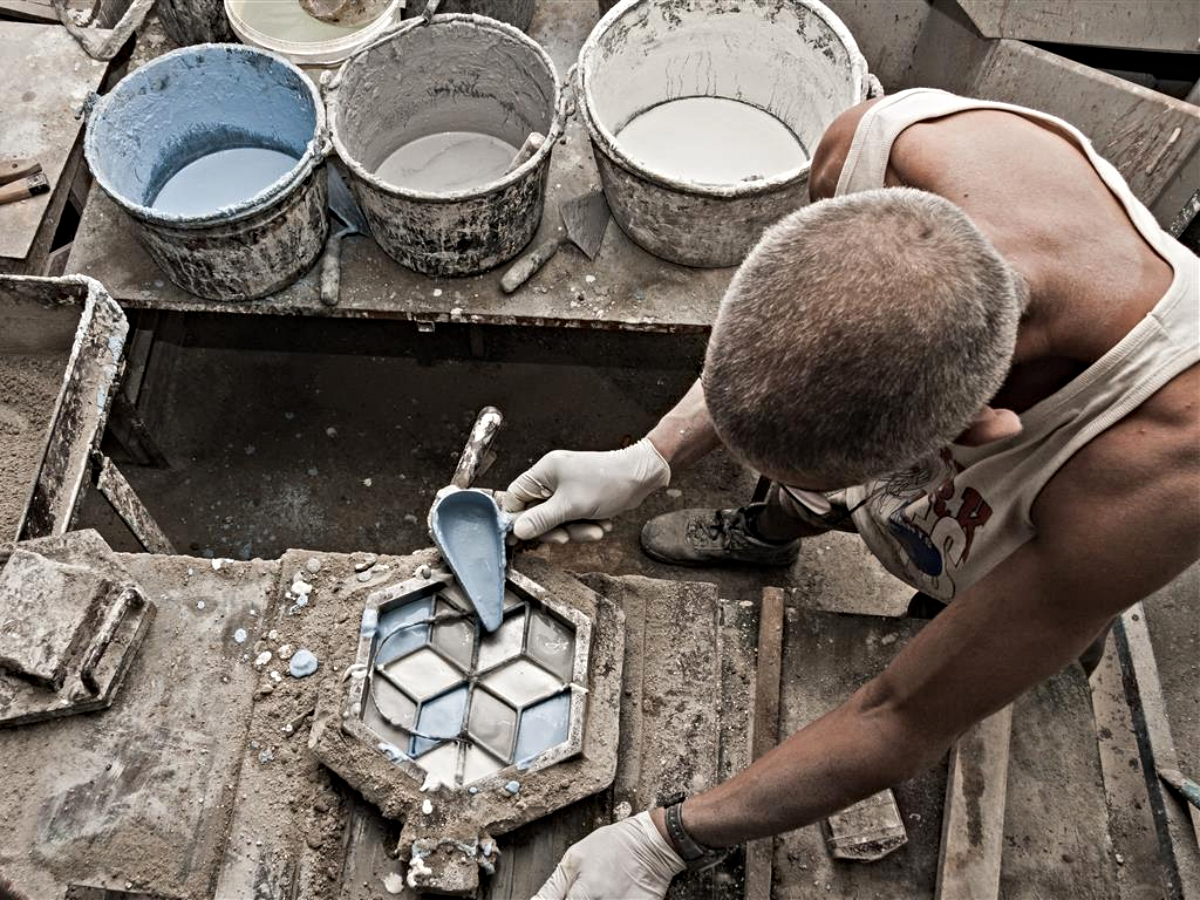
Photo courtesy of maltatina
Cement tiles are entirely handcrafted using a precise mixture of cement, marble powder, natural pigments and sand. The visible surface of the tile is created by pouring coloured cement into a compartmentalised metal mould known as a divider. This tool allows artisans to form sharp, intricate patterns without colour bleeding.
Once the decorative layer begins to set, a thicker structural layer is added beneath it. The tile is then placed under high pressure using a hydraulic press. After pressing, the tiles undergo a long curing process, including air drying and immersion in water. This final stage triggers a chemical hydration reaction that ensures exceptional solidity and longevity.
This artisanal process, unchanged for generations, is what gives cement tiles their matte finish, depth of colour and remarkable durability.
Patterns, Colours and Symbolism in Maltese Tiles
Maltese cement tiles display a wide variety of patterns, ranging from geometric compositions to floral and arabesque motifs inspired by Mediterranean decorative traditions.
Geometric designs often feature stars, crosses, hexagons and interlocking circles. These forms evoke ideas of balance, harmony and continuity, creating rhythmic floor compositions that structure interior spaces.
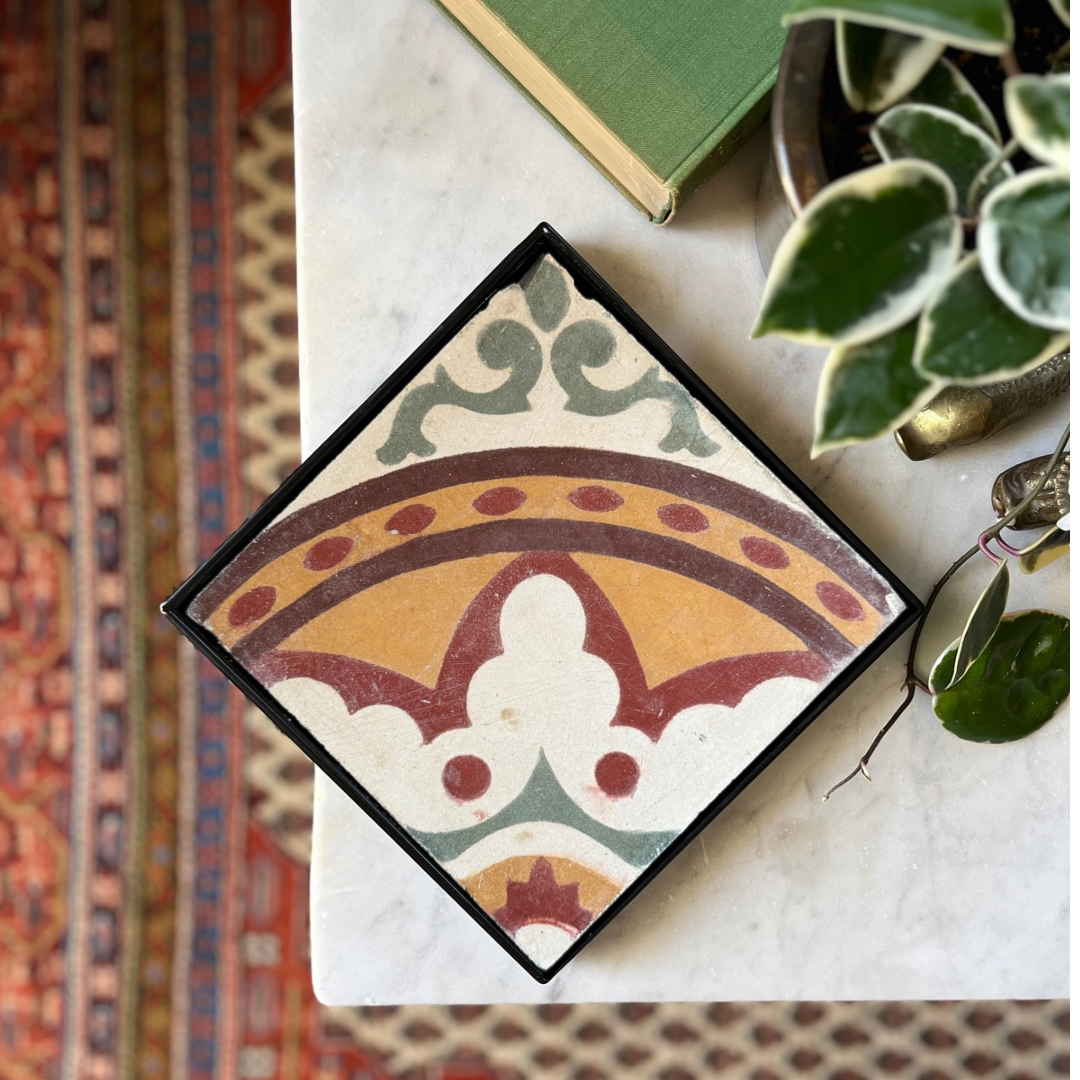
Photo courtesy of Lazarus Tiles
Floral motifs are equally prevalent, with stylised flowers, leaves and scrolling arabesques influenced by Mediterranean, Moorish and Baroque aesthetics. These patterns symbolise nature, vitality and renewal, echoing themes deeply rooted in local culture and architecture.
The colour palette is rich and expressive, combining reds, blues, greens and ochres. Together, pattern and colour reflect not only aesthetic preferences, but also values such as prosperity, longevity and connection to the natural world.
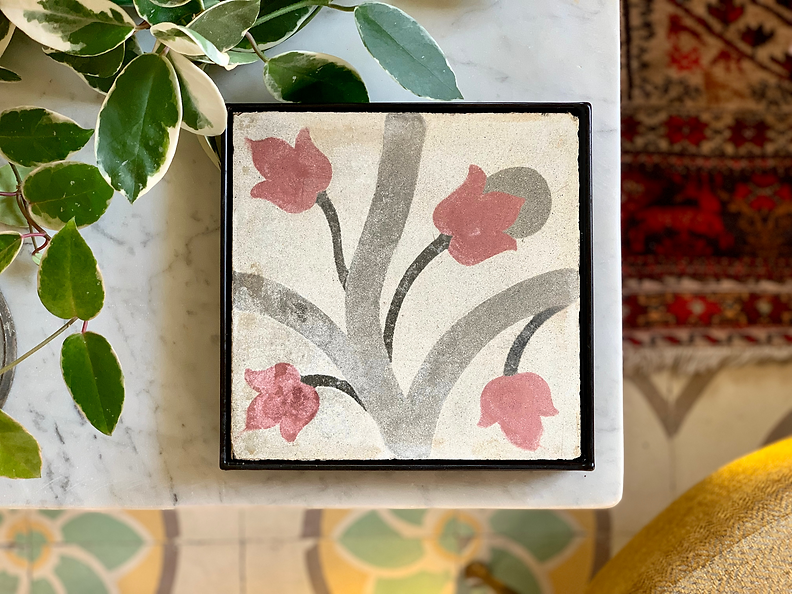
Photo courtesy of Lazarus Tiles
Your content goes here. Edit or remove this text inline or in the module Content settings. You can also style every aspect of this content in the module Design settings and even apply custom CSS to this text in the module Advanced settings.
A Living Craft Experiencing a Revival
Today, cement tiles in Malta are experiencing a renewed interest. Far from being confined to the past, this decorative art is once again in demand, both in heritage restorations and contemporary interiors. Several workshops continue to produce tiles using traditional methods, responding to a growing appreciation for authentic, sustainable and handcrafted materials.
Visitors encounter these tiles not only in private homes, but also in cafés, boutique hotels and renovated public spaces. Their resurgence aligns with a broader global movement favouring artisanal craftsmanship and timeless design over mass-produced materials.
A Floor That Tells a Story
When walking through Maltese streets or entering historic buildings, cement tiles invite attention downward. Each floor tells a story — of craftsmanship, cultural exchange and everyday life. They stand as quiet yet powerful witnesses to Malta’s artistic and architectural history, preserving a tradition that
remains vibrant and relevant today.
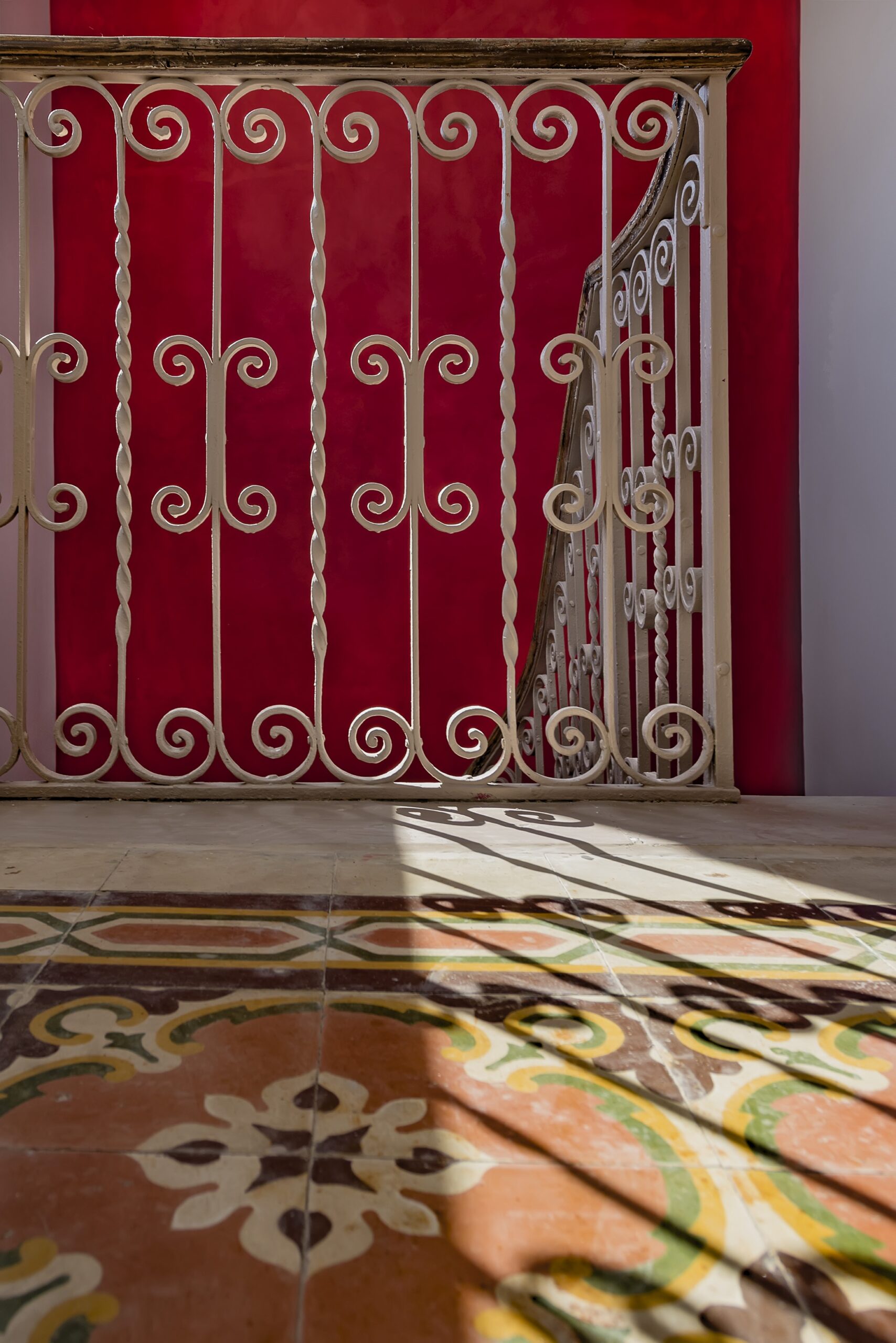
Staircase Landing at The Snop House
FAQ – Cement Tiles in Malta
What are cement tiles made of?
They are made from cement, marble powder, natural pigments and sand, pressed without firing.
When did cement tiles appear in Malta?
They were introduced in the second half of the 19th century, following their invention in France.
Why are cement tiles common in Maltese houses?
Their durability, resistance to heat and decorative appeal made them ideal for Mediterranean homes.
Are cement tiles still produced in Malta today?
Yes. Traditional techniques are still used by workshops responding to renewed demand.