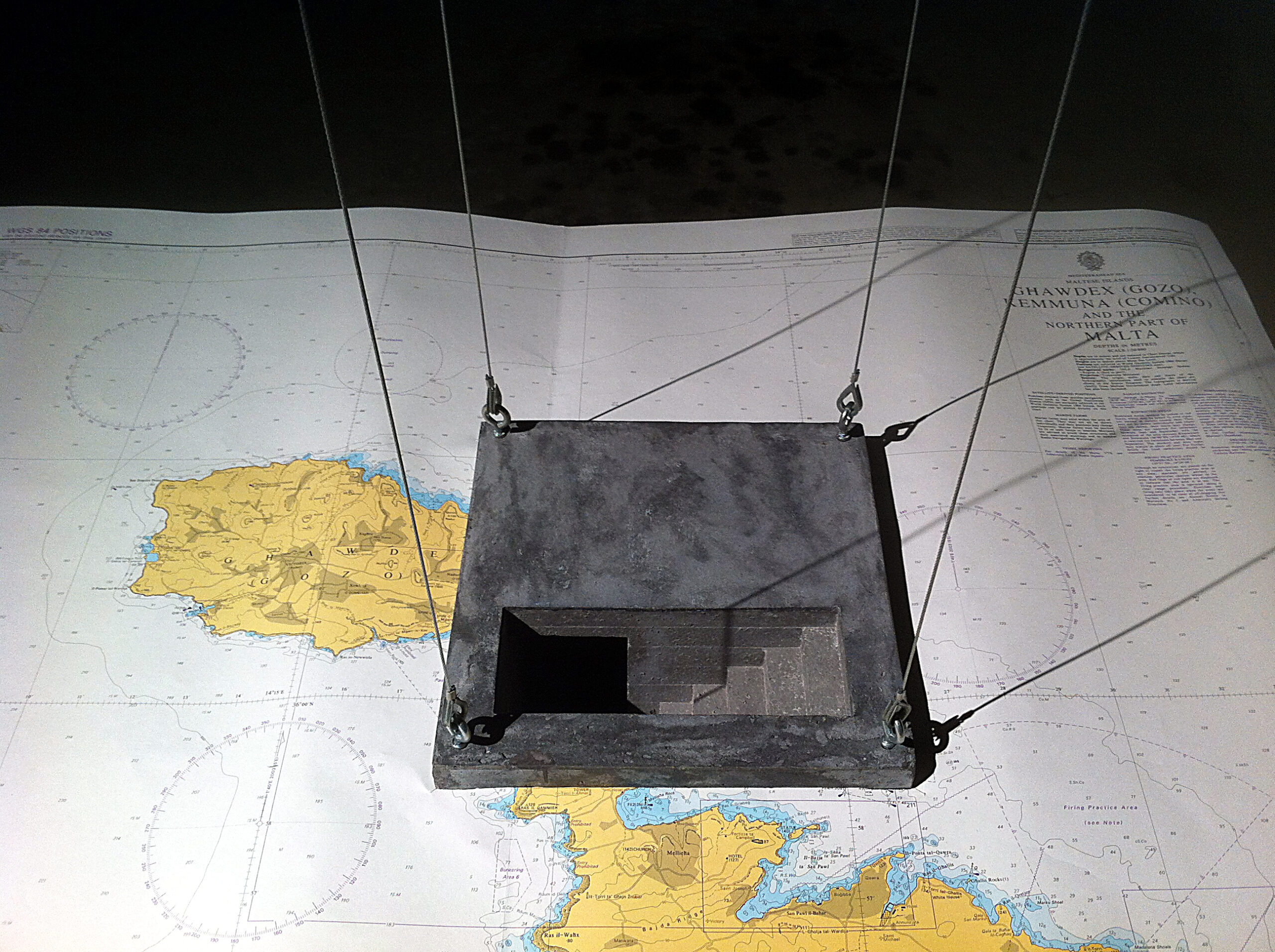
The Phoenician influence in Malta dates back more than 2,700 years and remains a fundamental part of the island's historical identity. During the 8th and 7th centuries BC, the Maltese archipelago played a crucial role as a maritime trading hub in the Mediterranean, offering safe harbours for Phoenician sailors traveling between the Levant, North Africa and Southern Europe.
Because of its strategic position in the central Mediterranean Sea, Malta became an important base for commerce, navigation and cultural exchange. The legacy of the Phoenicians continues today through archaeological sites, linguistic traces and cultural traditions that still shape Maltese identity.
Understanding the Phoenician presence in Malta reveals how ancient Mediterranean civilizations influenced the development of the Maltese language, culture and maritime traditions.
Malta's Strategic Role in Phoenician Maritime Trade
The Phoenicians, originally from the eastern Mediterranean (modern-day Lebanon and surrounding regions), were among the greatest sailors and traders of the ancient world.
They arrived in Malta around the mid-7th century BC, attracted by the island's strategic maritime position. Located between Sicily, North Africa and the Tyrrhenian Sea, Malta served as an ideal stopover for ships navigating trade routes across the Mediterranean.
Ancient historian Diodorus of Sicily described Malta as a safe refuge for Phoenician ships, highlighting its sheltered bays and natural harbours.
From Malta, Phoenician traders exchanged goods across the Mediterranean, including:
• dyed textiles, particularly the famous Phoenician purple
• metals and tools
• glassware
• wine and olive oil
• pottery and ceramics
These trade networks transformed Malta into an important transshipment hub connecting eastern and western Mediterranean markets.
Historical sources, including Cicero, also suggest that Malta's hidden coves sometimes served as shelters for piracy, which was not uncommon among maritime traders of the ancient world.
Archaeological Evidence of the Phoenician Presence in Malta
Archaeological excavations across Malta and Gozo provide strong evidence of the Phoenician and later Punic presence on the islands.
Sites discovered across the archipelago include tombs, shrines, shipwrecks and agricultural settlements. Many artefacts recovered from these sites date back to the 7th century BC, confirming the intensity of Phoenician maritime activity.
Phoenician pottery is particularly dominant among the finds, representing approximately 90% of the artefacts discovered from this period, which indicates strong commercial connections with the eastern Mediterranean.
Major Phoenician Archaeological Sites in Malta
Tas-Silg (Marsaxlokk)
This important sanctuary site yielded figurines of the goddess Astarte, ivory objects, red-glazed pottery and religious altars, reflecting Phoenician religious practices.
Ghajn Qajjet Tomb (Rabat)
Excavations uncovered red-glazed pottery, a Cypro-Phoenician bronze torch and a proto-Corinthian kotyle dating from the early 7th century BC.
Xlendi Shipwreck (Gozo)
This shipwreck contained Tyrrhenian amphorae, millstones, urns and possibly locally produced honey, demonstrating active trade networks between Malta and other Mediterranean regions.
Zurrieq
Rock-Cut Tombs These burial sites revealed amulets, jewelry and Phoenician pottery, illustrating the funerary traditions of Phoenician settlers.
Cippi of Melgart
These marble steles with bilingual Greek-Phoenician inscriptions represent important linguistic and religious evidence from the 2nd century BC.
San Pawl Milqi and Ras ir-Raheb
These sites reveal Punic farms, olive presses and shrines, showing how Phoenician agricultural traditions continued during the Punic period.
Together, these discoveries confirm that Malta was deeply integrated into Phoenician and Punic Mediterranean networks.
Phoenician and Punic Influence on the Maltese Language
The Phoenician influence on the Maltese language remains a subject of academic debate.
Modern Maltese is officially classified as a Central Semitic language derived primarily from Sicilian-Arabic, which developed between the 9th and 11th centuries during Arab rule in Malta.
However, the Phoenician language - particularly its later form known as Punic — survived in the region until at least the 5th century AD, even after Roman and Arab domination.
Some researchers believe that elements of Punic may have survived within the evolving Maltese language, forming a linguistic substratum beneath later Arabic influences.
Linguistically, Maltese includes:
• approximately one-third vocabulary of Arabic origin
• significant lexical influences from Italian and Sicilian
• a Semitic grammatical structure
Examples of common Maltese words with Semitic roots include:
• ragel (man)
• dar (house)
While most linguists attribute the structure of Maltese primarily to Arabic, some cultural historians argue that Phoenician-Punic elements may have contributed to the early linguistic evolution of the island.
Features such as the glottal sound represented by the letter "q" resemble phonetic patterns found in other Semitic languages such as Aramaic and Syriac.
Genetic studies also support a long-standing Semitic heritage among the Maltese population, suggesting continuity from ancient Phoenician settlers.
Phoenician Cultural Influence in Malta
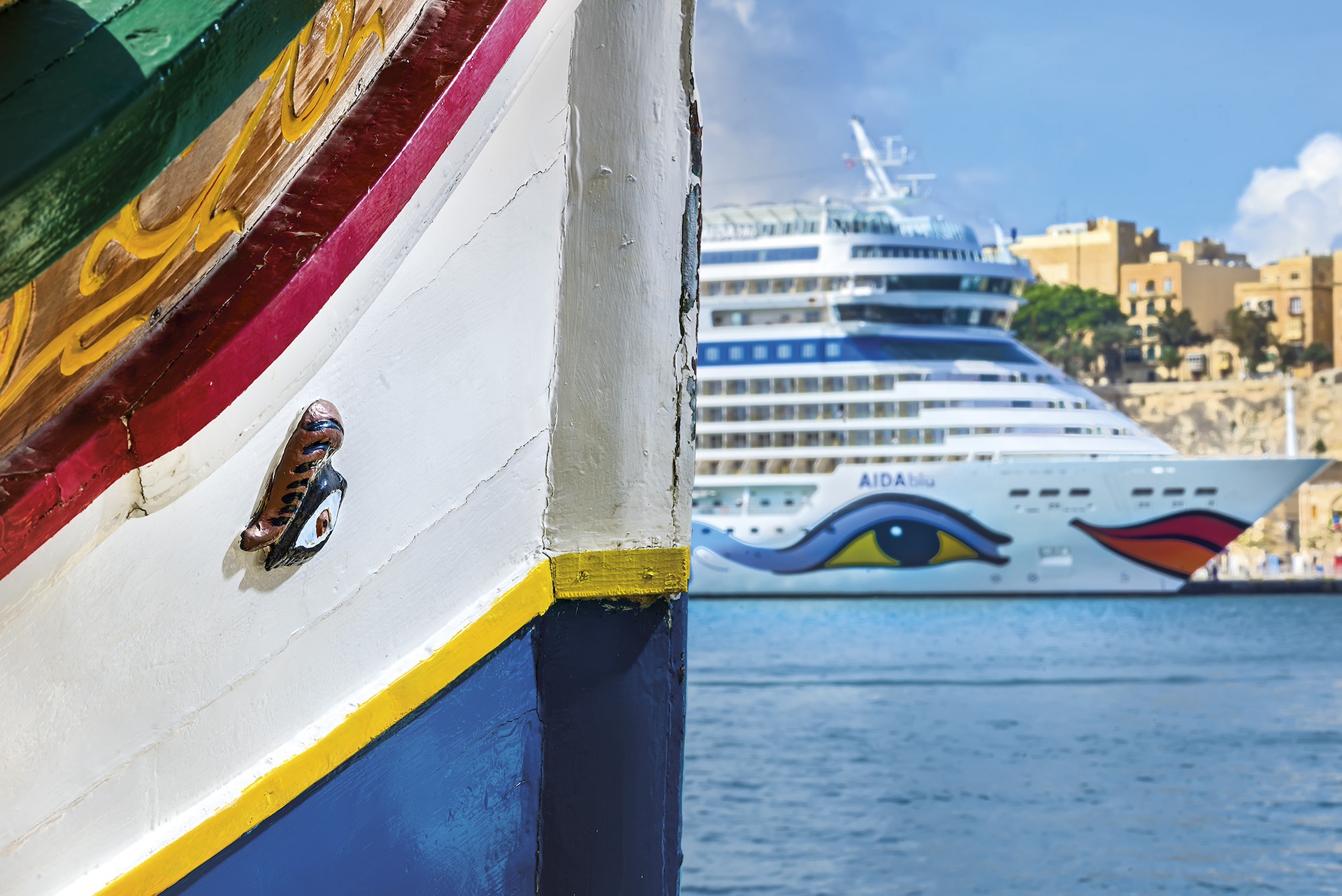
Luzzu eye with cruiser (photo: Daniel Cilia)
Beyond language, Phoenician culture in Malta has left visible traces in local traditions and maritime practices.
One of the most recognizable symbols is the protective eye painted on the bows of traditional Maltese fishing boats known as luzzus.
These painted eyes are believed to originate from ancient Phoenician and Punic beliefs that such symbols could protect sailors from evil spirits and guide them safely across the sea.
Today, these colorful boats remain a defining feature of Malta's fishing villages, particularly in Marsaxlokk, where dozens of luzzus line the harbor.
Phoenician religious traditions also influenced local cults. At sites such as Tas-Silg, archaeologists discovered figurines of Astarte, demonstrating the presence of Phoenician religious practices that continued into the Punic and Roman periods.
Museums across Malta display pottery, inscriptions and artifacts that illustrate the island's Phoenician and Punic heritage, helping visitors understand the deep cultural layers that shaped Maltese civilization.
The Phoenician Legacy in Modern Maltese Identity
Today, the Phoenician heritage of Malta continues to inspire cultural symbols and historical narratives.
The logo of The Snop House boutique hotel, for example, draws inspiration from Phoenician symbolism connected to the island's ancient maritime traditions.

One of the most recognizable symbols linked to this heritage is the Eye of Osiris (or Eye of Horus), which appears on the bows of traditional Maltese boats. This symbol, rooted in ancient Mediterranean beliefs, reflects the continuity of maritime traditions that date back to the Phoenician era.
These visual and cultural references demonstrate how ancient civilizations continue to influence Malta's identity today.
A Mediterranean Legacy That Still Shapes Malta
The Phoenicians transformed Malta into an important maritime and commercial center in the ancient Mediterranean. Their influence continued through the Punic period and contributed to shaping the island's cultural and linguistic foundations.
Although modern Maltese evolved primarily from Sicilian-Arabic, the broader Semitic heritage of Malta reflects centuries of interaction between Phoenician, Punic, Arab and Mediterranean cultures.
From archaeological sites and ancient inscriptions to colorful fishing boats in Maltese harbours, the legacy of the Phoenicians remains deeply embedded in the island's history.
Exploring the Phoenician influence in Malta offers a fascinating glimpse into how ancient civilizations helped shape the language, traditions and maritime culture of the Maltese archipelago.