Why does the Maltese flag feature the George Cross? The answer lies in one of the most important chapters of Malta's World War Il history. Every 15 April, Malta commemorates an honour unlike any other. Awarded to the island by King George VI in 1942, the George Cross recognised the courage and resilience of the Maltese population during the Second World War, when the archipelago endured intense bombing, shortages and isolation.
Today, the George Cross on the Malta flag is much more than a reminder of British rule. More than eight decades after it was awarded, it has become one of the most recognisable symbols of Maltese history and national identity.
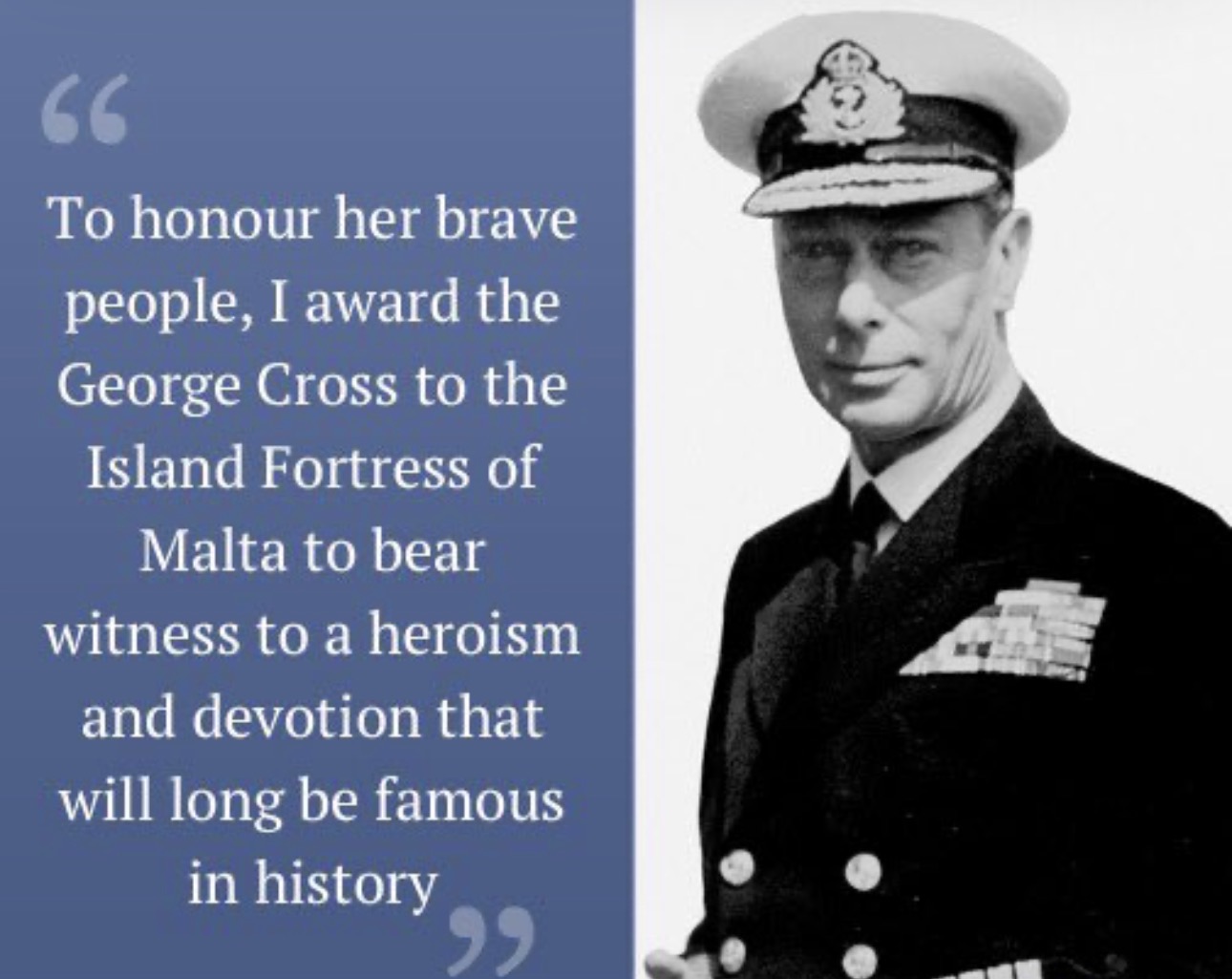
The George Cross was awarded to Malta by King George VI to honour the heroism of the Maltese people during World War II.
Photo: Clarence House
What is the George Cross?
The George Cross was established by King George VI in September 1940, while the United Kingdom and its empire were fighting the Axis powers during World War II.
The decoration was created to recognise acts of exceptional courage performed in circumstances of extreme danger, particularly by civilians. Unlike the Victoria Cross, traditionally associated with military gallantry, the George Cross could recognise civilian bravery.
It could be awarded to an individual or collectively. This is precisely what makes the George Cross awarded to Malta so remarkable: the honour recognised the courage of an entire island and its people.
Why was Malta awarded the George Cross?
During World War II, Malta occupied a crucial strategic position in the Mediterranean. Located between Europe and North Africa, the archipelago served as an important British military and naval base and played a major role in controlling Mediterranean supply routes. Its strategic importance also made Malta a major target.
The Maltese population endured relentless air raids, widespread destruction and severe shortages of food and fuel. Valletta, the Three Cities, Hamrun, Birkirkara and many other towns suffered extensive damage. Yet daily life continued. Maltese civilians rescued the wounded, cleared rubble and helped maintain essential services. Churches, schools and underground shelters became places of refuge as communities across the island organised themselves to survive. It was this collective resilience that ultimately led to Malta receiving the George Cross.
King George VI awards the George Cross to Malta
On 15 April 1942, King George VI officially announced that the George Cross would be awarded to Malta. In his message, the King recognised the courage of the Maltese population and its resistance in the face of sustained enemy attacks. The decoration was awarded collectively to Malta, its people and its defenders.
The decision gave Malta a unique place in the history of the George Cross. The medal would later become part of the Maltese national flag, where it remains today. Its presence serves as a reminder that Malta's wartime resistance was not only strategically important. It was also a story of extraordinary civilian endurance.
The George Cross ceremony in Valletta in 1942
The George Cross was formally presented in Malta on 13 September 1942, during a ceremony in St George's Square in Valletta. The location carried particular significance. Valletta still bore the scars of the air raids, and the damaged surroundings provided a striking backdrop to the ceremony.
Chief Justice Sir George Borg accepted the George Cross on behalf of the Maltese people, while Governor Field-Marshal Viscount Gort formally presented the decoration.
Documents preserved by the National Archives of Malta, including the official invitation and a detailed plan of the ceremony, provide a tangible record of the event. They show how the ceremony unfolded in a capital still visibly marked by war. The George Cross was therefore not presented to an island looking back on a distant conflict. It was awarded while Malta and its population were still living through its consequences.
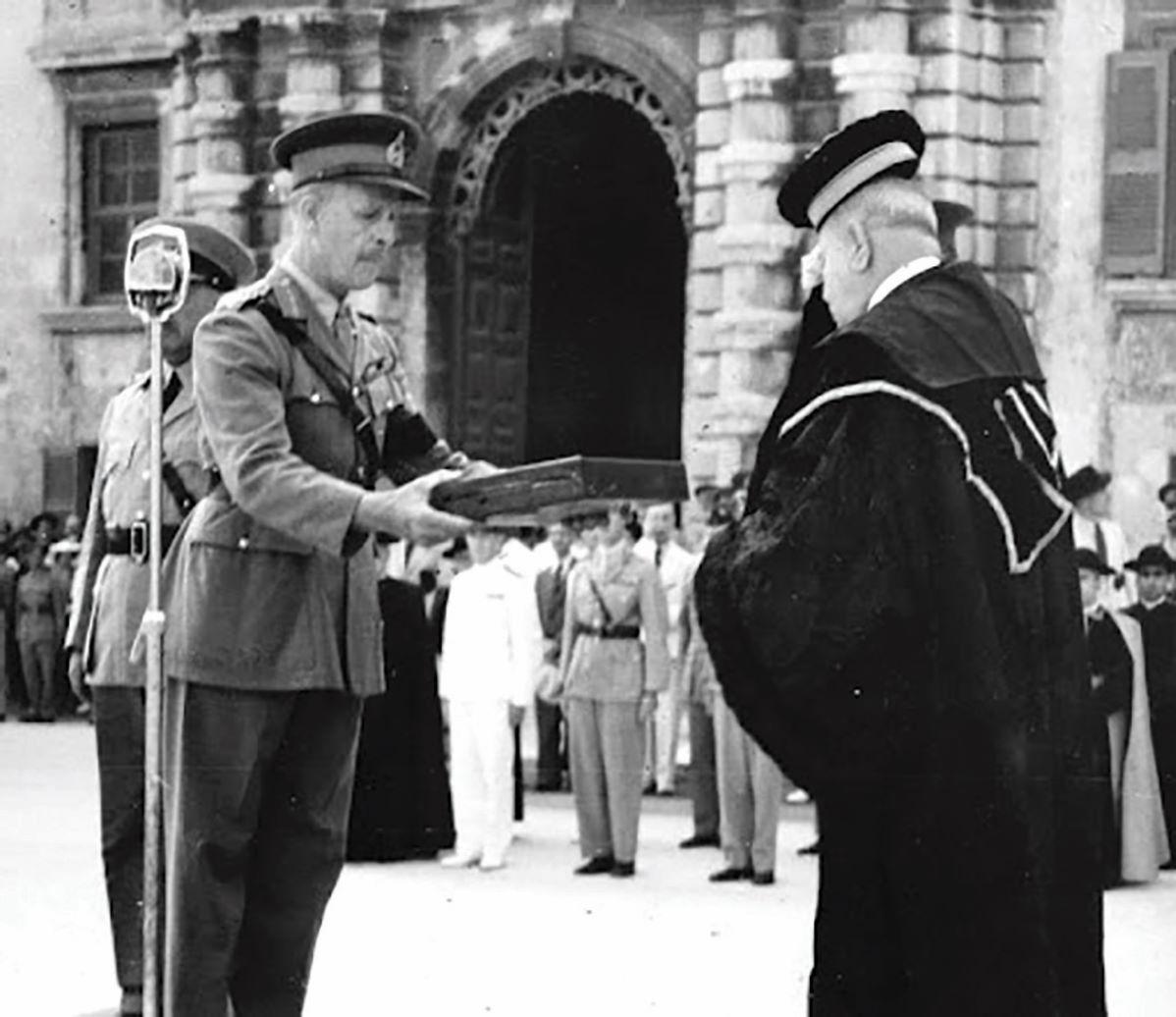
13 September 1942: Governor Field-Marshal Viscount Gort (1896-1946) presenting the George Cross medal to Sir George Borg, Chief Justice of Malta, who accepted it on behalf of the Maltese population. Photo: Maltacommand.com
George Cross or St George's Cross: what is the difference?
The George Cross is sometimes confused with the Cross of St George, but the two symbols are entirely different. The Cross of St George is a red cross on a white background and is traditionally associated with England and its patron saint, St George.
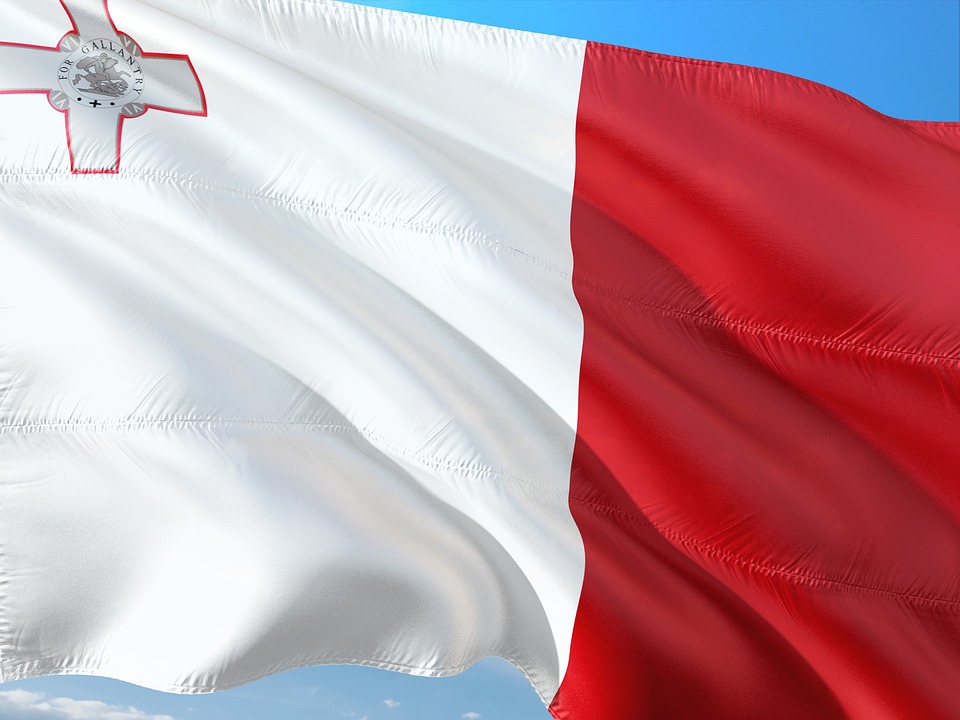
The George Cross, meanwhile, is the decoration established by King George VI in 1940 to recognise exceptional bravery. The symbol appearing on the flag of Malta is the George Cross, represented in the upper hoist-side corner of the white section of the flag and outlined in red. Although the decoration has British origins, its meaning has become deeply connected to Maltese national history.
Why is the George Cross on the Maltese flag?
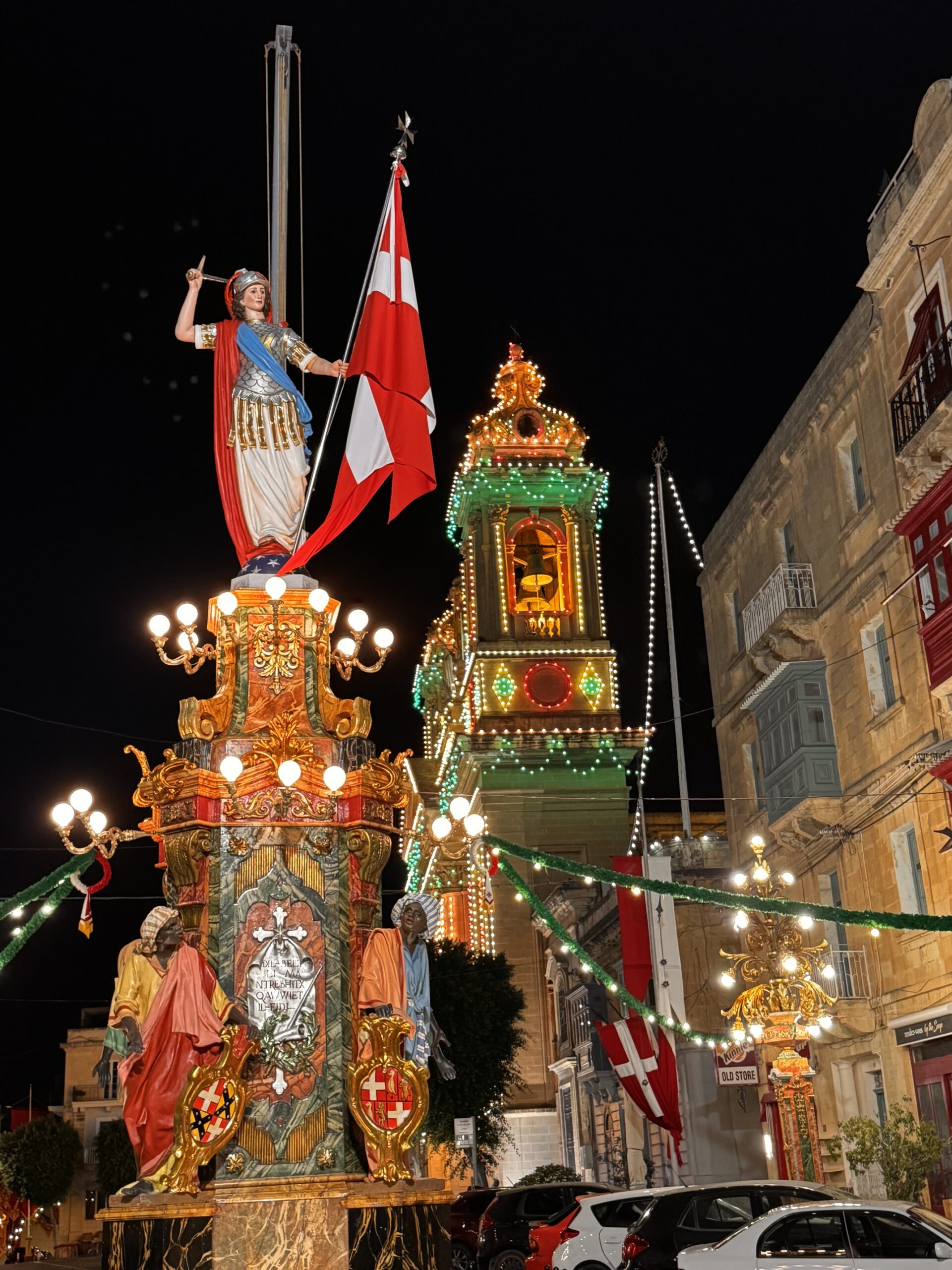
The flag of Malta consists of two equal vertical bands: white on the hoist side and red on the fly side. The George Cross appears in the upper corner of the white band, edged in red. Its presence commemorates the courage demonstrated by the Maltese population during World War II. When Malta became independent on 21 September 1964, the George Cross was retained on the national flag. The newly independent country therefore preserved the decoration as part of its own national symbolism. The meaning of the cross consequently evolved. What had originally been a British decoration became a permanent reminder of the experiences of the Maltese people during the war.
What do the red and white colours of the Malta flag mean?
The red and white colours of the Maltese flag have a history that extends much further back than the George Cross. According to a longstanding Maltese tradition, Count Roger I of Sicily gave the islanders a red-and-white banner following the Norman conquest of Malta in 1091. The story remains popular, although historical evidence supporting this exact origin is limited.
Red and white have also been associated with the legacy of the Knights Hospitaller, whose emblem featured a white cross on a red background. Over the centuries, the two colours became deeply embedded in Malta's political and cultural identity.
White is commonly associated with peace and purity, while red is often interpreted as representing courage and sacrifice. These interpretations accompany a much older history of red and white as colours associated with the Maltese archipelago.
From British decoration to Maltese national symbol
The George Cross has undergone a remarkable transformation in Malta. Originally awarded by a British monarch during World War II, it remained part of the Maltese flag after the country gained independence. Its continued presence reflects several interconnected chapters of Malta's history: its strategic position in the Mediterranean, the suffering endured by civilians during World War II, the island's military importance and the resilience demonstrated by its population.
Rather than disappearing with the end of British rule, the George Cross became incorporated into the identity of independent Malta.
The George Cross and Malta today
More than eight decades after the events of 1942, the George Cross remains one of Malta's most visible historical symbols. It can be seen every day on the national flag, but its significance extends far beyond heraldry. It recalls a period when Malta was one of the most heavily contested locations in the Mediterranean and when its civilian population faced bombing, shortages and destruction.
The historical documents preserved in Malta, the wartime remains found across the island and the George Cross itself all contribute to keeping this memory alive. Against the red and white of the Maltese flag, the George Cross tells a story that connects the island's past with its modern national identity: a story of war and hardship, but above all one of collective courage and resilience.