Senglea, 500 years of History (1/3)
At the heart of the Grand Harbour, opposite Valletta, a narrow stone peninsula juts out into the sea like a ship's prow: Senglea, L-Isla, the most intimate of the Three Cities. Founded by the Knights of the Order of St John and shaped by Grand Master Claude de la Sengle, the "Città Invicta" has survived sieges, wars and the harbour's transformations. Today, its bastions, narrow streets and refined guesthouses tell a story in which military architecture blends with the Mediterranean way of life.
In the Age of the Knights: when L-Isla was nothing more than a strip of rock
When the Knights of the Order of St John arrived in Malta in 1530, the Grand Harbour immediately established itself as the strategic heart of the island. The Order's ships found a safe haven there, protected by a ring of low-lying land that would later become the Three Cities.
Birgu (Vittoriosa) was the first to develop into a fortified town, whilst the L-Isla peninsula, then named Isola di San Giuliano, remained a rocky outcrop jutting out into the sea, used as an outpost and hunting ground, with just a small chapel dedicated to Saint Julian (still standing today). Yet its purpose was already clear: to be an inhabited promontory, a stone sentinel watching over the harbour's entrances.
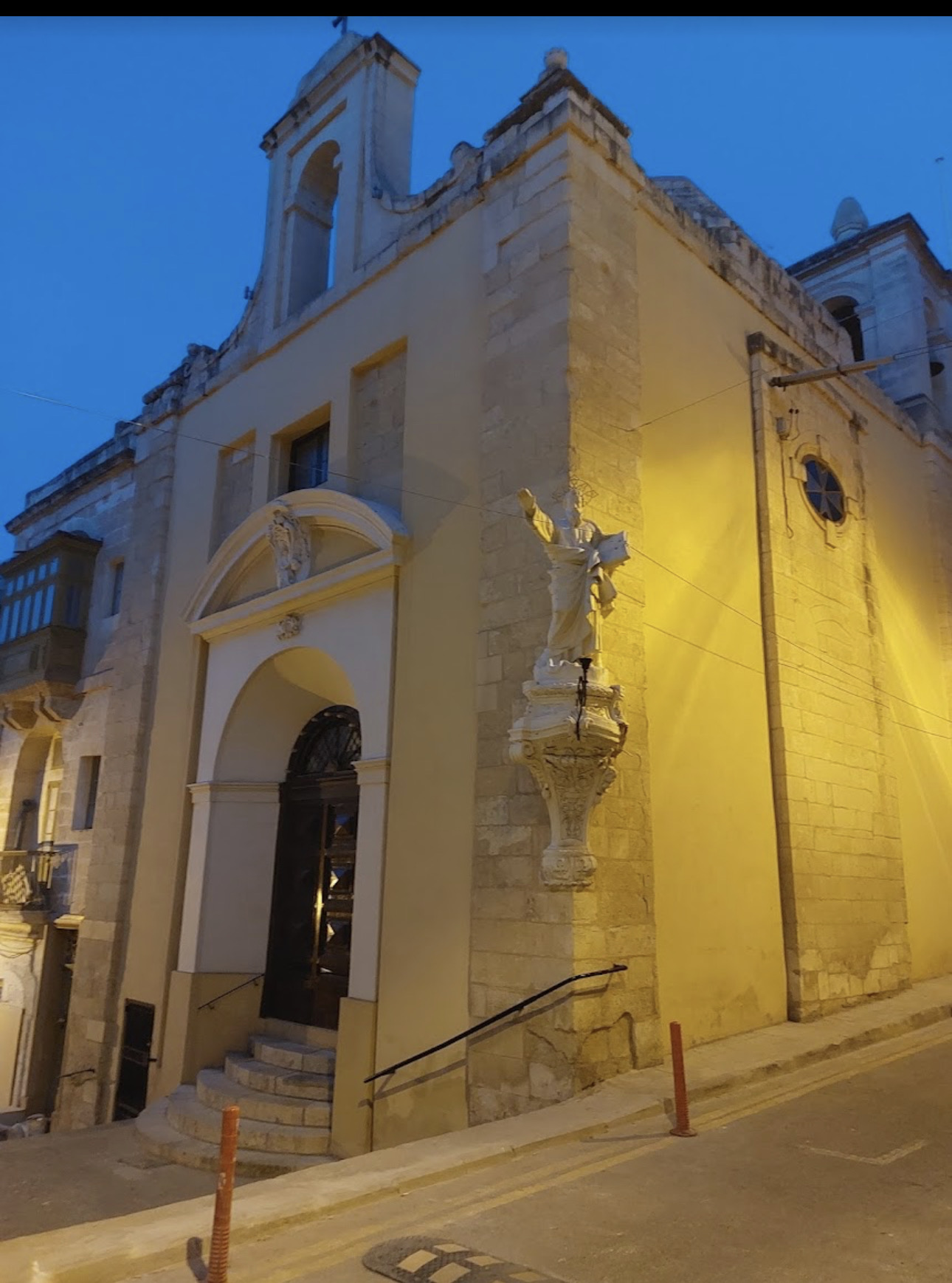
Chapel of St Julian, Senglea . Remain of Isola di San Giulano
In this maritime setting, geography shaped destiny: the sea outlined the contours of the future city, and the Knights quickly recognized that this strip of land would one day be an essential bulwark, a key vantage and defensive point.
Claude de la Sengle, the Grand Master who gave the city its name
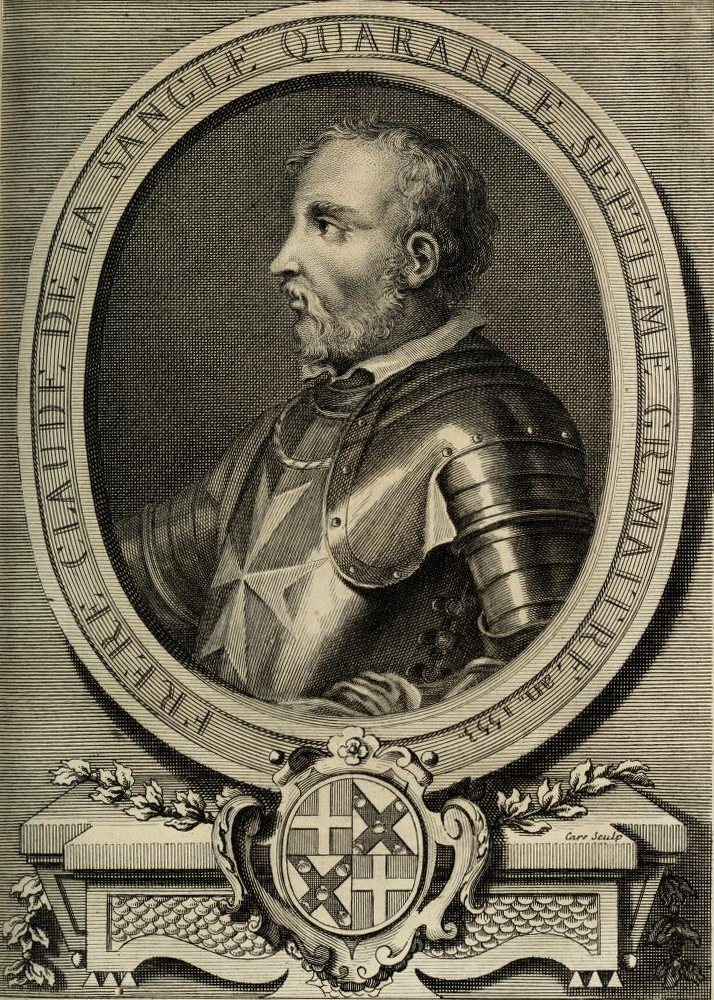
It took the vision of one man to transform this peninsula into a proper city: Claude de la Sengle, Grand Master of the Order of St John in the mid-16th century. Under his leadership, L-Isla ceased to be a mere extension of Birgu and became an entity in its own right, structured around powerful fortifications and a rapidly expanding urban network.
The Grand Master had the peninsula's defences reinforced by building bastions and outworks, including Fort Saint-Michael, which formed part of the defensive system of the Three Cities. Stone was put to strategic use: thick walls, broken lines, and angles calculated to disrupt the rhythm of attacks. Gradually, the name of its patron came to the fore: L-Isla became Senglea, in honour of Claude de la Sengle, thus enshrining in the place name the city's gratitude towards the man who brought it into being.
Beyond the military aspect, the transformation was also urban and human. Dwellings sprang up along the narrow streets, chapels appeared, and families of sailors and craftsmen settled there. The peninsula became populated, and the city took shape.
The Great Siege of 1565: the birth of the Città Invicta
Senglea's defining moment came in 1565, during the Great Siege of Malta. The island was threatened by a vast Ottoman armada, determined to break the Order's resistance and gain control of this strategic key to the Mediterranean. The Grand Harbour thus became a vast battlefield, where every bastion and every strip of land counted.
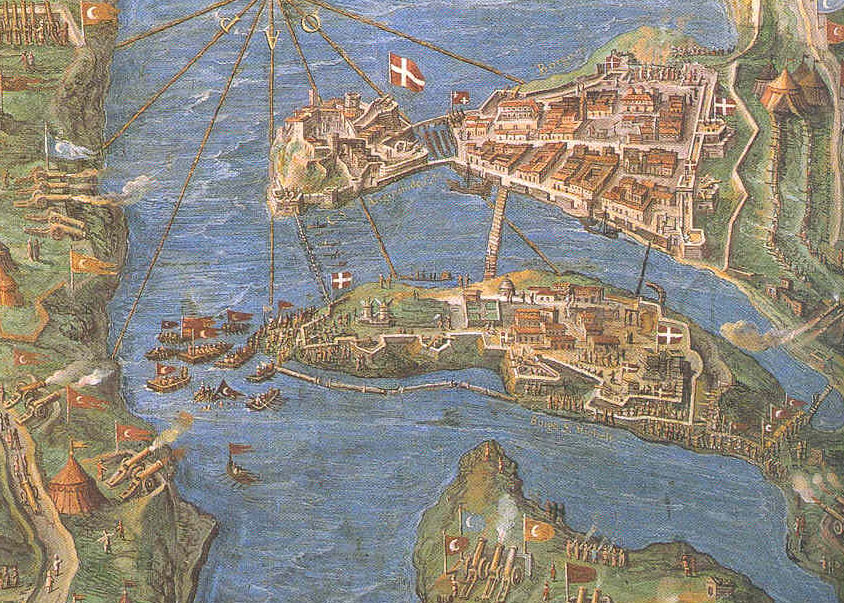
Pre-siege of Malta (c. 1530)
Source: Nostalgia Malta / Frank Dimech
Senglea found itself on the front line. Assaults followed one after another and tore through the defences, and the sea itself seemed to tremble under the impact of the fighting. Yet the Knights, supported by the inhabitants, held their ground. The narrow layout of the peninsula, ringed by fortifications, enabled it to absorb the attacks and repel attempts to land. The city suffered, but did not yield.
When the siege ended and the Ottomans withdrew, the city had established itself as a symbol of resilience. In recognition of this heroic resistance, it was awarded the title of "Città Invicta," the unconquered city. This name, still proudly borne today, is like a watermark on the stones: it serves as a reminder that here, a small town nestled by the sea changed the course of history.
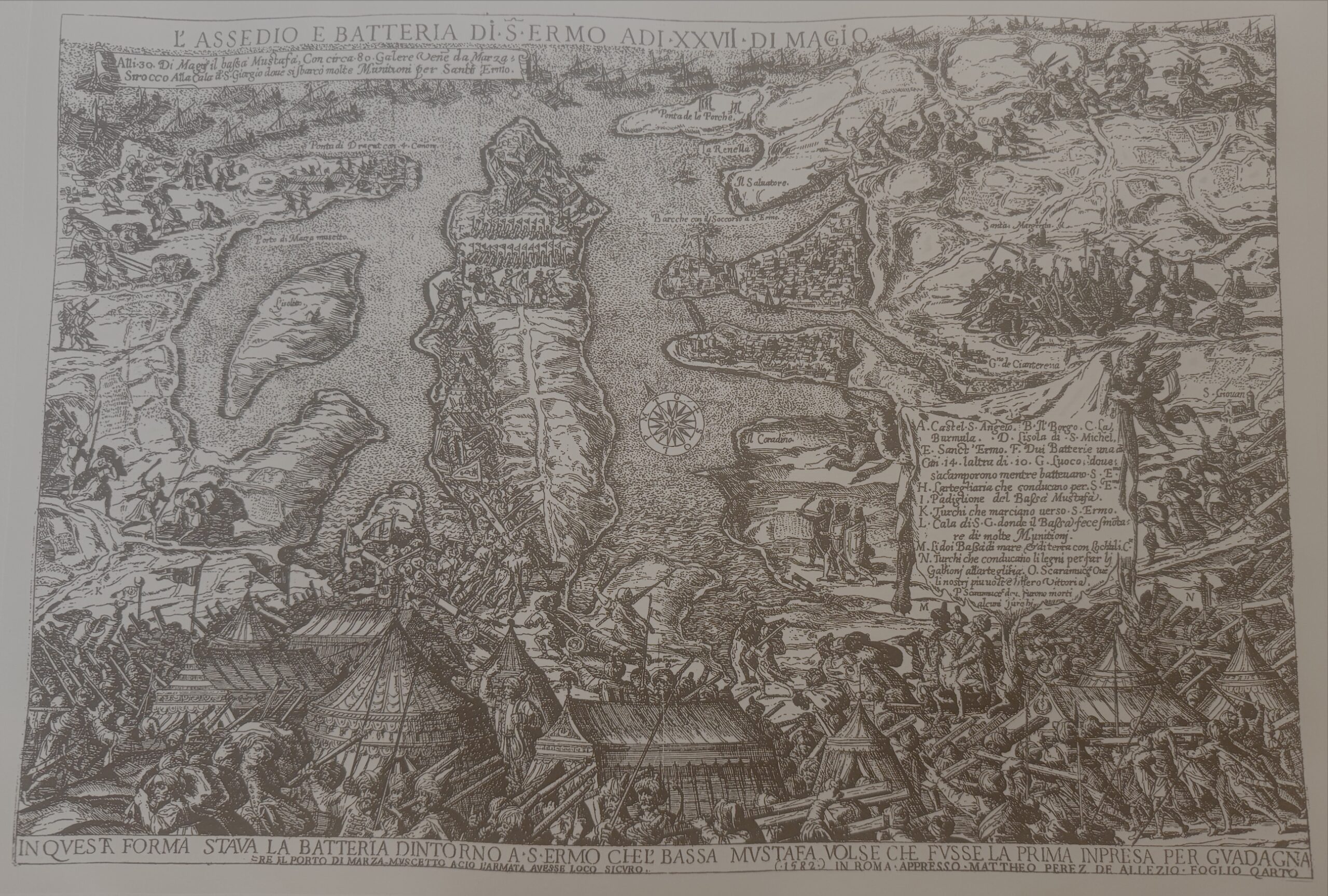
The Great Siege
Etching by Mattéo Perez di Allecio (Roma 1582)
From a medieval city to a contemporary Mediterranean retreat
The legacy of this era can still be seen in Senglea's urban landscape. At the tip of the peninsula, the Gardjola Gardens offer one of the most spectacular views of the Grand Harbour. At the far end of the gardens, the small sentry box known as the Gardjola stands watch, adorned with a carved eye and ear, a symbol of vigilance and a metaphor for a city that sees and hears everything that happens in the harbour.
As you make your way down towards the heart of the city, narrow alleys wind their way between houses with wooden balconies, votive niches, staircases and small squares. Here, one can feel both the rigour of the original defensive layout and the spontaneity of Mediterranean living: washing hanging from the windows, plants on the steps, doors left ajar onto cool interiors. The sea is never far away; you can glimpse it at the end of a street, hear it lapping into the harbour, and smell it in the salty air.
This compact urban network preserves the memory of the Knights whilst embracing contemporary rhythms. The bastions have become viewing points, the narrow streets a backdrop to everyday life, and the old family homes are sometimes transformed into charming little establishments.
Bastions, Gardjola and narrow streets: a living heritage
If you stroll through it today, Senglea feels like a Mediterranean haven on a human scale. It has neither the hustle and bustle of Valletta nor the ceaseless flow of visitors found in the major seaside resorts. Instead, it offers a sense of intimacy, that of a small town which has weathered the centuries, sieges and changes of power, and which now welcomes travelers with warmth.
The Knights' legacy is evident in the silhouette of the peninsula, in the bastions, and in the names of the streets and neighborhoods. But it is also reflected in the local way of welcoming guests: warm hospitality, the art of opening one's home, and a flair for creating a welcoming atmosphere. Guesthouses such as The Snop House fit naturally into this tradition. In their own way, they carry on the legacy of a city that once sheltered the Order's galleys, and which today preserves a certain way of life, discreet, refined and profoundly Maltese.
As you gaze out at the sea from a balcony or terrace, you feel that Senglea remains a jewel of the Three Cities: a town shaped by stone, by the sea and by the memory of the Knights, but one that is now open to those who take the time to experience it.