Senglea, 500 years of History (2/3)
When the British flag flies over the Grand Harbour, Senglea takes on a new character. The Royal Navy base transforms the harbour into the strategic heart of the Empire in the Mediterranean, whilst the small peninsula becomes both a city of dockworkers and a town of dignitaries, intellectuals and prestigious families. Then came the Second World War: the bombings targeted the shipyard, ravaged the town and forever altered its social and urban landscape. Caught between colonial elegance, working-class life and the scars of war, Senglea endured one of the most turbulent periods in its history.
The Grand Harbour, the Royal Navy's Mediterranean showcase

The British Navy officer's residence in Senglea. Photo: Daniel Cilia.
During the period of British rule, the Grand Harbour was confirmed as a major military port at the heart of the Mediterranean. Royal Navy vessels established a base there between Gibraltar and Suez, and the Three Cities found themselves at the centre of this imperial geography.
Within this new maritime order, Senglea was no longer merely the Knights' 'Città Invicta': it became a cog in a vast naval machine. The quays were modernised, infrastructure expanded, and warships came and went in a steady stream as crews were rotated and ships called at the port.
The British presence imposed its own codes: strict timetables, discipline on the docks, the silhouettes of officers in uniform, whilst at the same time becoming woven into the structure of the city's daily life.
This coexistence of Maltese tradition and imperial power shaped a unique atmosphere: that of a city where English was spoken alongside Maltese, where British sailors could be seen leaving the taverns, and where the horizon was dotted with masts, plumes of smoke and foreign flags.
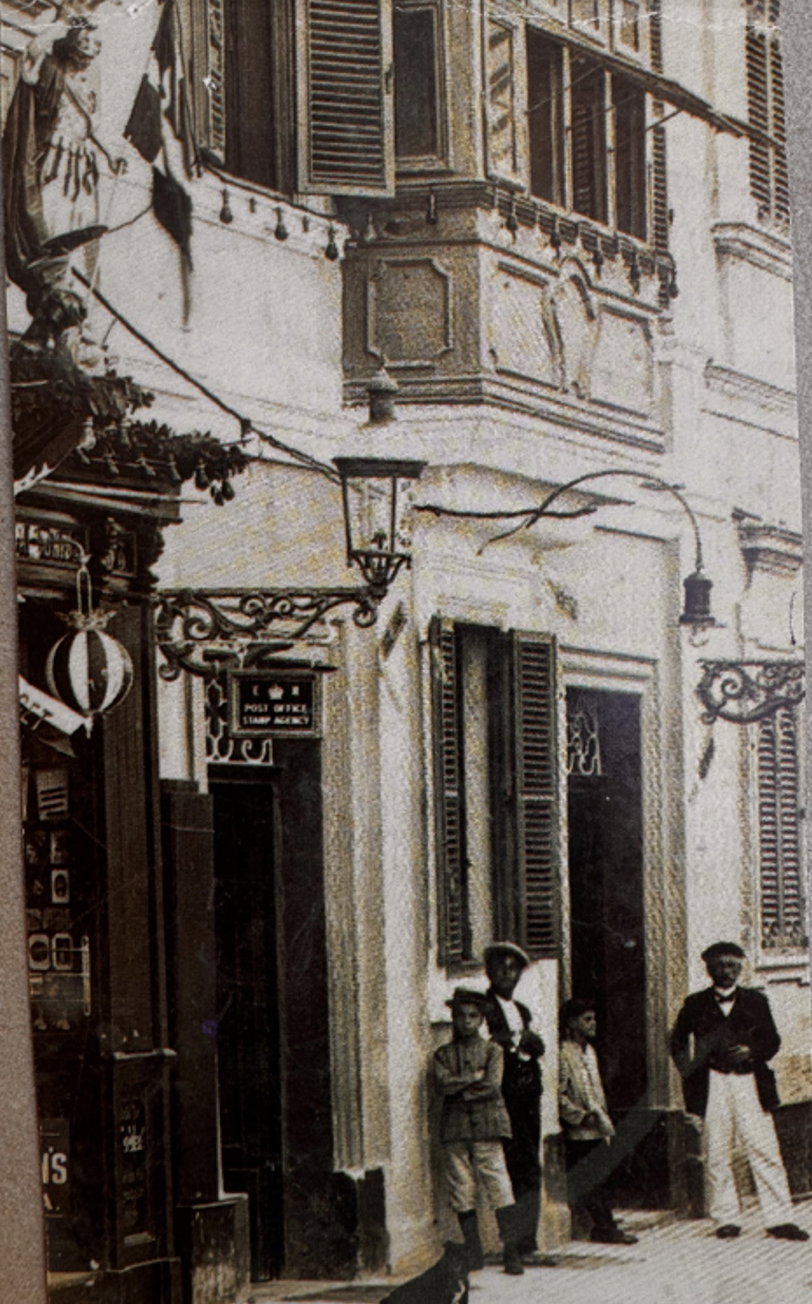
The Queen's Own Band Club, Senglea
This bar club is one of the emblematic bars in Senglea before WWII : Trocadero Bar, the Blue Danube bar, the Private Saloon, the Black Cat…
Dockyards and demolitions: a city reshaped by the shipbuilding industry
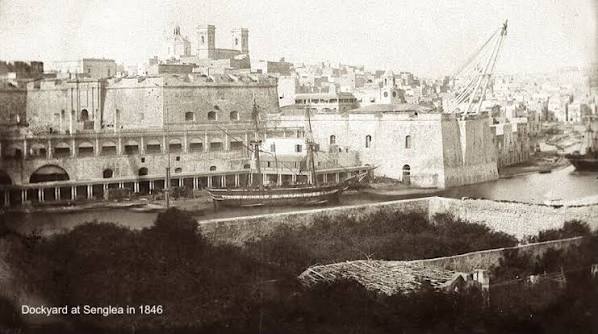
The British authorities' strategic priority was clear: to develop and strengthen naval facilities. To expand the dockyard, entire sections of the fortifications inherited from the Knights were altered or demolished. Some bastions were converted, others disappeared, making way for workshops, cranes, dry docks and technical buildings.
Senglea was reshaped around this new industrial hub. The clatter of hammers, machinery and shipyards now forms the daily soundtrack of the peninsula. The inhabitants live to the rhythm of the dockyard's working hours, the arrival of ships, and repairs and refits. The city, originally conceived as a defensive bastion, established itself as a working-class city, linked to metallurgy, naval engineering and port-related trades.
This transformation left its mark on the town's urban layout: some views were blocked off, others opened up, and the town's historical relationship with its bastions was partly reinterpreted through the lens of industrial logic. The military stonework was now put to use in the service of a modern naval economy.
Notables and intellectuals: Senglea, a small port town of 'notables'
This working-class aspect should not obscure another facet of Senglea during the British period: that of a town with a significant class of notables, intellectuals and influential families. The proximity of the harbour and the colonial institutions attracted lawyers, teachers, doctors, ship captains, clergy and political figures, who found the town to be both a practical and prestigious setting.
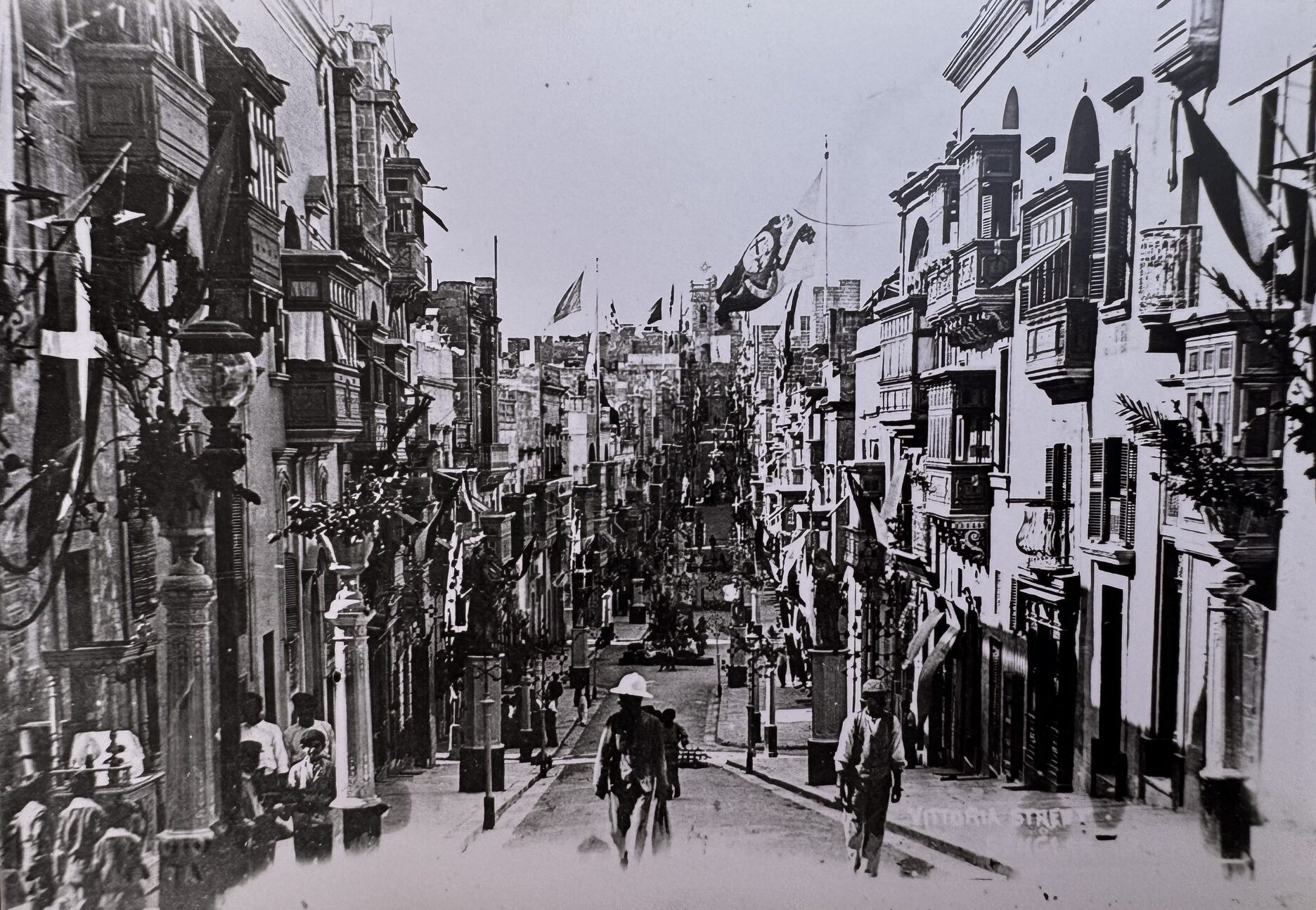
Victory Street, Senglea, in the 1930's
Beautifully crafted houses lined certain streets (Victory Street, where The Snop House is situated, was formerly known as Stretta Reale, a name synonymous with the elegance of the area) and the seafront, housing drawing rooms, libraries and small informal academies where people discussed religion, politics, literature and the island's future. The presence of the British administration, admirals and officers fostered a flow of ideas, newspapers, languages and cultural references. Senglea forged a reputation as a respected town, home to a cultured elite, set within a very working-class port environment.
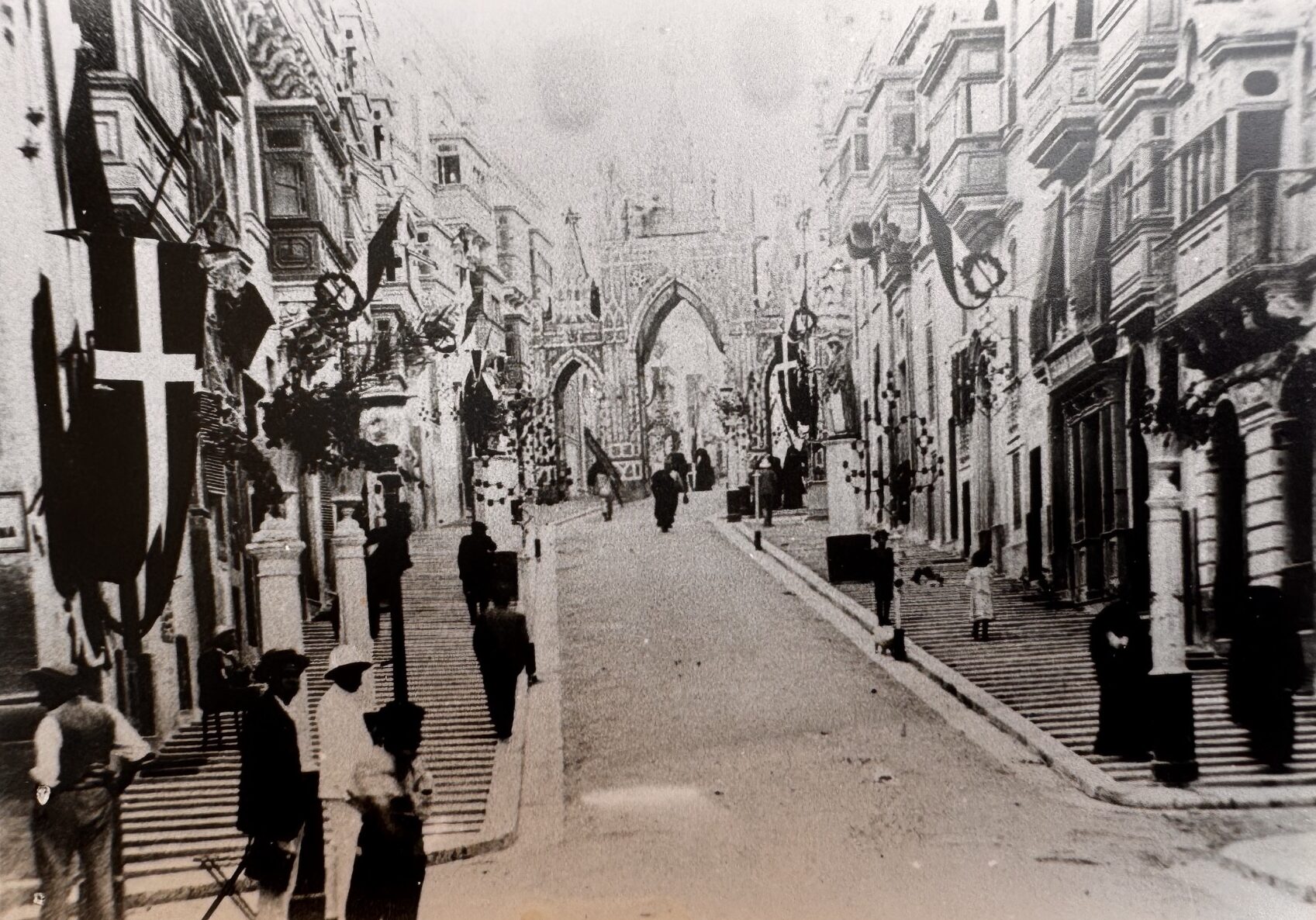
Victory Street, Senglea, in the 1930's
This coexistence between the working-class world and intellectual circles gave the city a complex identity: here, dockers rubbed shoulders with the town's notables, neighbourhood cafés stood side by side with the homes of prestigious families, and one could pass, in the space of a few narrow streets, from the clamour of the shipyards to the tranquillity of a cosy living room.
The Second World War: a city in the eye of the storm
When the Second World War broke out, Senglea's naval heritage turned against it. The dockyard facilities and the ships moored in the Grand Harbour became prime targets for air raids. Bombs fell not only on strategic infrastructure but also on residential neighbourhoods, making the small peninsula one of the hardest-hit areas in the region. The site where The Snop House now stands was once a very large bourgeois mansion with a vast garden owned by the Benedetti family.
Repeated air raids destroyed houses, streets and churches, and struck ships whose explosions tore through the surrounding urban structure. Residents took refuge in makeshift shelters, cellars and ancient fortifications, unless they had to flee to the interior of the island. The wealthier families, who could afford to do so, often left the city, some never to return after the war.
Intellectual and social life, so vibrant in the interwar period, was abruptly cut short. Libraries burned, precious objects vanished beneath the rubble, and local social networks fell apart. Senglea, once again, faced the violence of history, but this time the wound also affected its social structure and its urban landscape.
Ruins, reconstruction and fragmented memories
By the end of the conflict, the town was no longer quite the same as the one the British had known before the war. Entire sections of the built environment had been destroyed, whilst others were irreparably damaged. Reconstruction took place in stages, depending on available resources and priorities, combining planned interventions with spontaneous repairs carried out by residents.
In this reshaped landscape, the scars of war are still visible: open spaces where houses once stood close together, broken-up urban streetscapes, and the disappearance of certain architectural landmarks. The dockyard remains, but the memory of the bombings lives on in family stories, in the recollections of the elderly, and in photographs that are treasured.
The heroic 16th-century city had already faced cannon fire during the Great Siege; in the 20th century, it endured the roar of bombs and industrial explosions. These two traumas, separated by several centuries, overlap in the local memory, giving Senglea a unique historical depth: that of a city constantly exposed to the great forces of its time.
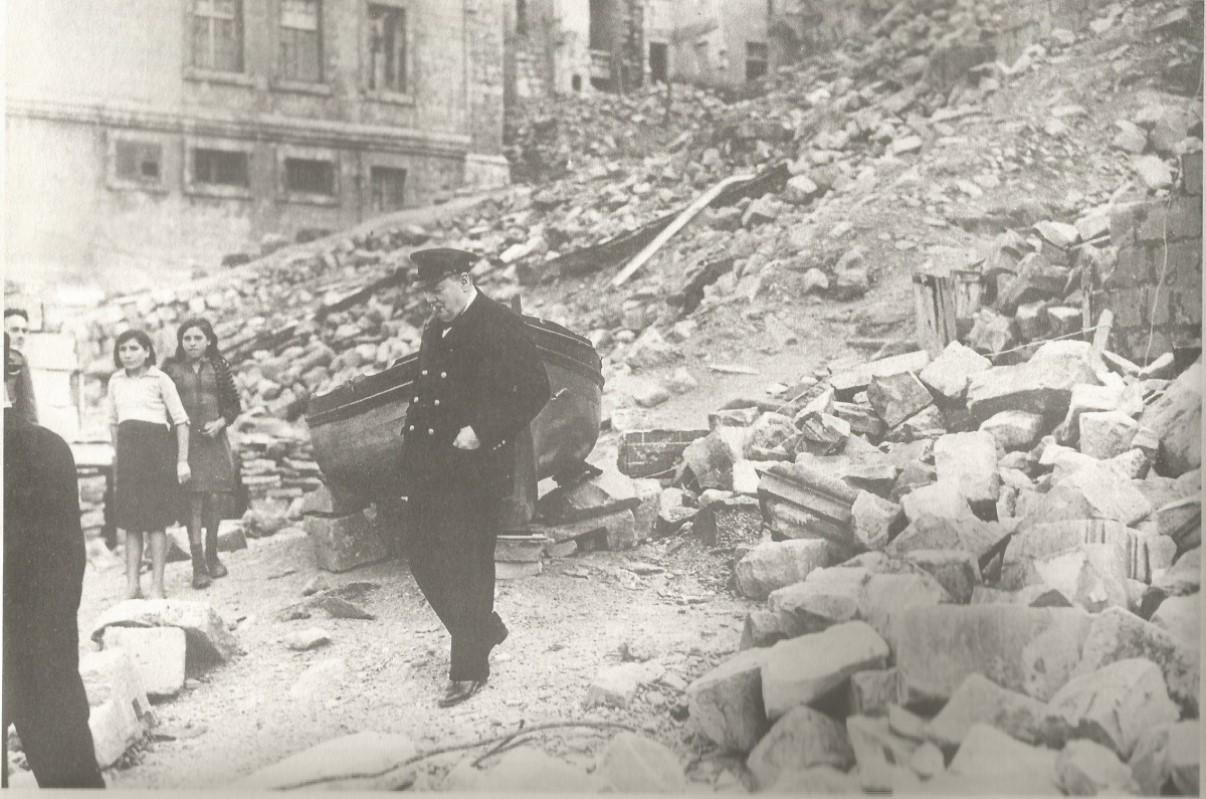
Churchill inspecting bomb damage in St Lawrenz Street
An identity shaped by the Empire and war
Senglea emerged from the British period and World War II with an identity deeply marked by the sea, the shipbuilding industry, the colonial presence and resilience in the face of destruction. The city is no longer merely the chivalrous stronghold of yesterday: it is also a working-class town, a former theatre of imperial ambitions, and an urban landscape reshaped by bombs.
This complex history partly explains the post-war social landscape: the flight of some of the elite, the consolidation of a community of dockers and port workers, and the political tensions to come surrounding the docks and the British withdrawal. Senglea's current character, at once modest, proud and steeped in memories, is the result of these accumulated layers.
Walking through its narrow streets today, strolling along its quays, one can imagine the presence of British officers, the clamour of the shipyards, the rumble of bombers in the sky. The city still bears the subtle imprint of that era when the Royal Navy's flag flew over the Grand Harbour, and when Senglea was one of its small human capitals.