Situated between Valletta and Malta's Three Cities, the Grand Harbour is one of the island's most spectacular landmarks. With its monumental fortifications, historic waterfronts and deep blue Mediterranean waters, it offers one of the most impressive harbour views in Malta.
But the Grand Harbour of Malta is much more than a beautiful landscape. For centuries, this natural harbour has played a central role in the island's history, from the Knights of St John and the Great Siege of 1565 to British rule, maritime trade and modern-day Malta.
Today, visitors can admire it from Valletta, explore its shores through the Three Cities or simply cross the water to experience one of the most memorable views on the island.
Where is the Grand Harbour in Malta?
The Grand Harbour is located on Malta's eastern coast, between the fortified capital of Valletta and the historic Three Cities of Birgu, Senglea and Cospicua.
Its geography explains much of its historical importance. Deep, naturally sheltered and divided into several creeks, the harbour provided an ideal anchorage for ships while occupying a strategic position at the heart of the Mediterranean. For centuries, defence, trade and maritime power converged here, making the Grand Harbour one of the most important locations in Malta's history.
Today, the same geography creates its remarkable scenery. Valletta rises dramatically above one side of the harbour, while the Three Cities extend along the opposite shore, surrounded by fortifications, marinas and historic buildings.
The history of Malta's Grand Harbour
The history of the Grand Harbour in Malta stretches back centuries, but the arrival of the Knights of the Order of St John in the 16th century marked a decisive turning point. The harbour became one of the strategic centres of the Maltese archipelago. Its natural characteristics made it both an exceptional naval base and a site that needed to be heavily defended.
Its importance became particularly clear during the Great Siege of Malta in 1565, when the Knights and the Maltese resisted the forces of the Ottoman Empire. The events surrounding the Grand Harbour helped shape the future of Malta. Following the siege, the Knights founded Valletta on the Sciberras Peninsula, further transforming the harbour and its surroundings.
The Grand Harbour is therefore more than a backdrop to Maltese history. Its geography directly influenced the island's military, political and urban development.
Fortifications around the Grand Harbour
The monumental fortifications surrounding the Grand Harbour are among its most distinctive features. Valletta, Birgu, Senglea and Cospicua were all developed in close relationship with the water. Forts, bastions and defensive walls protected the harbour and the communities established along its shores. Over the centuries, the Grand Harbour welcomed galleys, merchant ships, military vessels and British convoys. Naval and industrial activities also shaped daily life in the surrounding cities for generations. Their traces remain visible today. Bastions, walls, quays, dockyards, stairways and churches create a unique architectural landscape overlooking the Mediterranean.
Walking around the harbour is therefore also a journey through different chapters of Malta's maritime history.
One of the best views in Malta
History alone does not explain the fascination of the Valletta Grand Harbour. Its visual impact is equally remarkable. Throughout the day, the changing Mediterranean light transforms the landscape. Honey-coloured stone takes on warmer tones, reflections move across the water and the monumental fortifications stand dramatically against the horizon.
The relationship between Valletta and the Three Cities gives the harbour much of its character. On one side stands Valletta, rising high above the water behind its imposing fortifications. Across the harbour, Birgu, Senglea and Cospicua offer a more intimate relationship with the waterfront. The water between them does not simply separate these historic cities. It connects them and creates one of the most recognisable landscapes in Malta.
How to cross the Grand Harbour from Valletta to the Three Cities
One of the best ways to experience the Grand Harbour is from the water. The ferry between Valletta and the Three Cities provides an easy way to cross the harbour while enjoying panoramic views of its fortifications and waterfronts. Although the journey is short, the perspective changes completely once you are on the water. Valletta gradually reveals its monumental skyline while the creeks and historic buildings of the Three Cities appear on the opposite shore.
Traditional Maltese boats and other local boat services provide another way to discover the harbour at water level. From here, the Grand Harbour becomes more than something to admire from a viewpoint. The movement of the water, the wind and the changing perspectives offer a more immersive experience of one of Malta's most famous landmarks.
Discovering Valletta and the Three Cities from the harbour
The Grand Harbour is also an excellent starting point for discovering two different sides of Malta. Valletta, Malta's capital and a UNESCO World Heritage Site, dominates the harbour with its bastions, historic streets and monumental architecture.
Across the water, the Three Cities - Birgu, Senglea and Cospicua — offer another perspective on Maltese history. Their narrow streets, waterfronts, churches and fortifications provide a quieter and often more intimate experience of the island. The harbour connects these destinations both geographically and historically.
Crossing between them makes it possible to experience the contrast between the grandeur of Valletta and the distinctive atmosphere of the Three Cities within the same day.
Regattas and maritime events in the Grand Harbour
Despite its long history, the Grand Harbour remains a living harbour. Boats, ferries, yachts and larger vessels continue to cross its waters, while maritime and sporting events regularly bring the harbour to life. Traditional Maltese regattas are among its most emblematic events, with rowing teams representing different harbour communities competing against the spectacular backdrop of the fortifications.
The harbour is also closely associated with international sailing events, including the Rolex Middle Sea Race, which reinforces Malta's enduring connection with the Mediterranean and the open sea.
These events demonstrate that the Grand Harbour is not simply a historic monument. Maritime culture continues to shape its identity today.
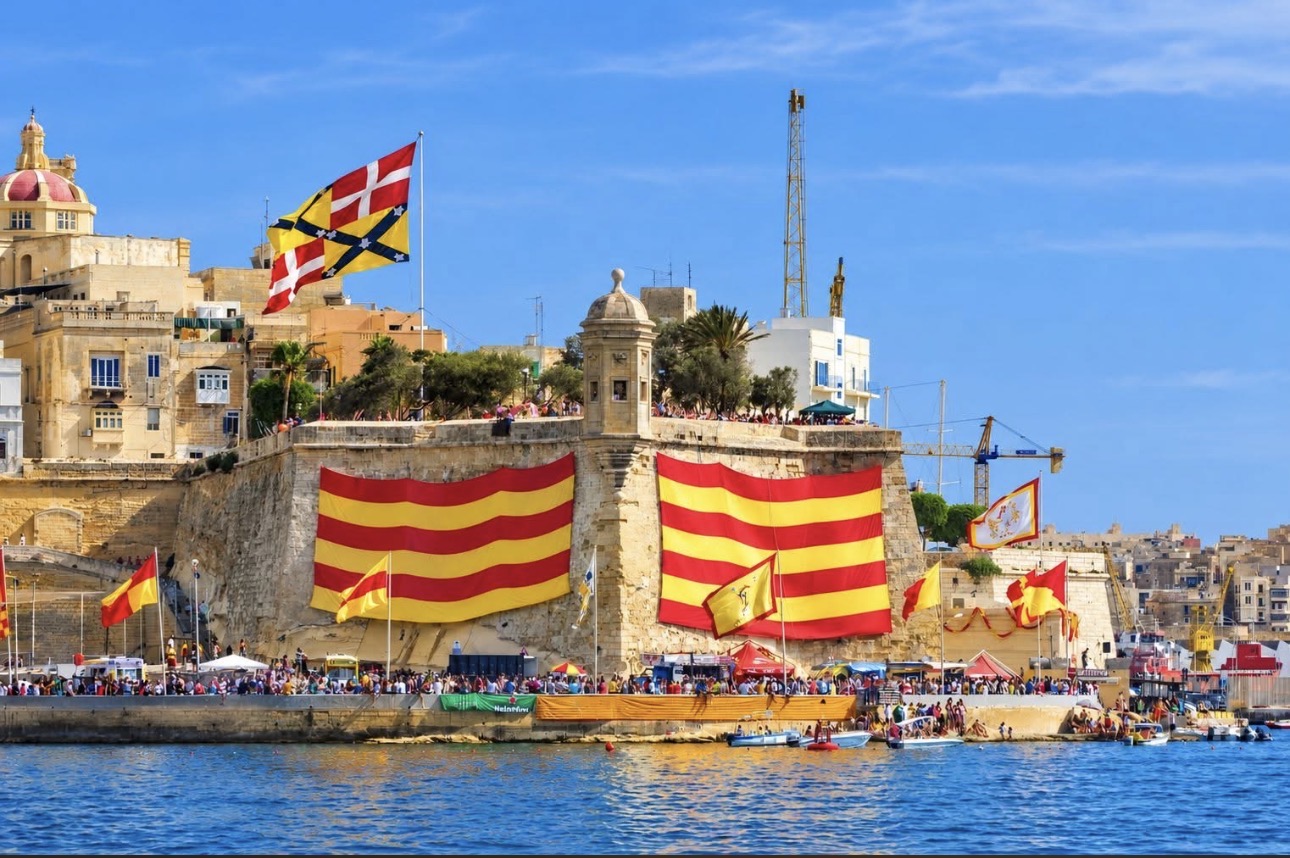
Regatta race on 8th September.
Photo Senglea Athletic FC
The Grand Harbour as a cinematic landscape
With its monumental fortifications, historic architecture, maritime vistas and distinctive Mediterranean light, the Grand Harbour has an unmistakably cinematic quality.
Seen from the water, its dramatic proportions become particularly apparent. Fortresses rise above the shoreline, limestone façades catch the sunlight and the harbour constantly changes according to the movement of boats and reflections.
It is easy to understand why this landscape has long fascinated travellers, photographers and filmmakers. Yet its appeal comes precisely from the fact that it is not simply a picture-perfect setting. Behind the spectacular views lies a harbour that remains active, inhabited and deeply connected to everyday Maltese life.
The Grand Harbour from Senglea
Among the different places from which to experience the harbour, Senglea offers a particularly intimate perspective on the Grand Harbour. Located directly opposite Valletta, the historic city has been shaped by its relationship with the water for centuries. Its streets, fortifications and waterfront provide numerous perspectives across the harbour and towards the Maltese capital.
Staying in Senglea also makes it possible to experience the Grand Harbour beyond a simple sightseeing visit. Morning light, passing boats, changing weather and evening reflections reveal different sides of the landscape throughout the day.
For visitors exploring the Three Cities of Malta, the harbour becomes part of everyday life rather than simply another attraction.
The Grand Harbour at The Snop House
The connection between The Snop House and Malta's Grand Harbour begins from the moment guests enter the hotel. A monumental artwork created specifically for The Snop House by French sculptor Sylvie de Meurville offers an unexpected artistic interpretation of the harbour. For many years, the artist has explored the memory of water, its movements, traces and the landscapes it shapes. Entitled Isobathe, the installation traces the outline of Valletta's Grand Harbour through its isobathic curves, the lines connecting points of equal depth beneath the surface of the sea.
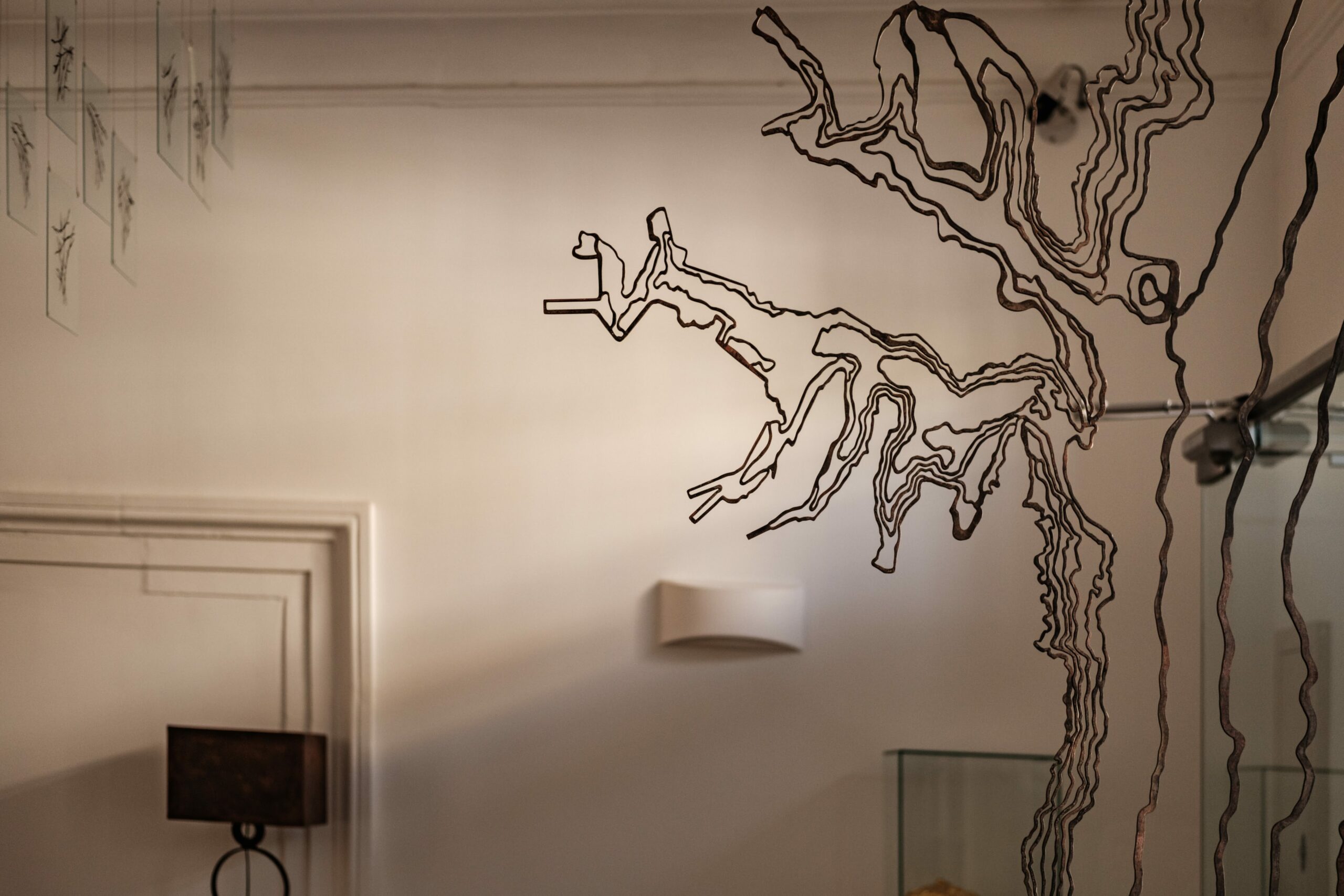
Sylvie de Meurville, Isobathe.
Photo: Brian Grech
Positioned like a delicate mashrabiya at the entrance of The Snop House, the work allows guests to symbolically cross the harbour before they have even stepped outside. Both artistic and geographical, Isobathe creates a direct connection between the hotel and the landscape surrounding it, anchoring The Snop House in the history, geography and maritime identity of the Grand Harbour and the Three Cities.