In Senglea, history is not only evident in the ramparts and bastions: it is also hidden beneath the town. The tunnels and underground passages of L’Isla bear witness to a military, urban and civilian past in which the underground space was used for defence, storage, survival and, later, to adapt to a densely built-up town. Their current fate today illustrates the classic tension between heritage preservation, contemporary reuse and partial oblivion.

A city built for defence
Senglea is one of the Three Cities, alongside Birgu and Bormla, a fortified complex known as the Cottonera, at the heart of Malta’s military history. In this context, the underground passages were initially designed to meet strategic needs: to facilitate discreet movements, protect defensive positions and provide emergency exits to the sea or to safer areas. The logic was simple: in a besieged city, the underground space became an extension of the fortifications.
The underground passages of Senglea and Birgu are thought to have been developed from the 16th century onwards, at a time when Mediterranean military engineers conceived of the city as a comprehensive defensive system. In Senglea, some tunnels are associated with the protection of St Michael’s Bastion and with exits allowing for strategic retreats, particularly towards the sea. The underground network was therefore not merely a technical void, but a tool of war.
The underground network of Senglea consists of a large tunnel running the entire length of the Senglea peninsula (from Fort St Michael to the Il Ponta bastion) with at least 23 entry and exit points. Exit No. 2 is located right next to The Snop House, beneath the post-WWII monument commemorating the reconstruction of Senglea.
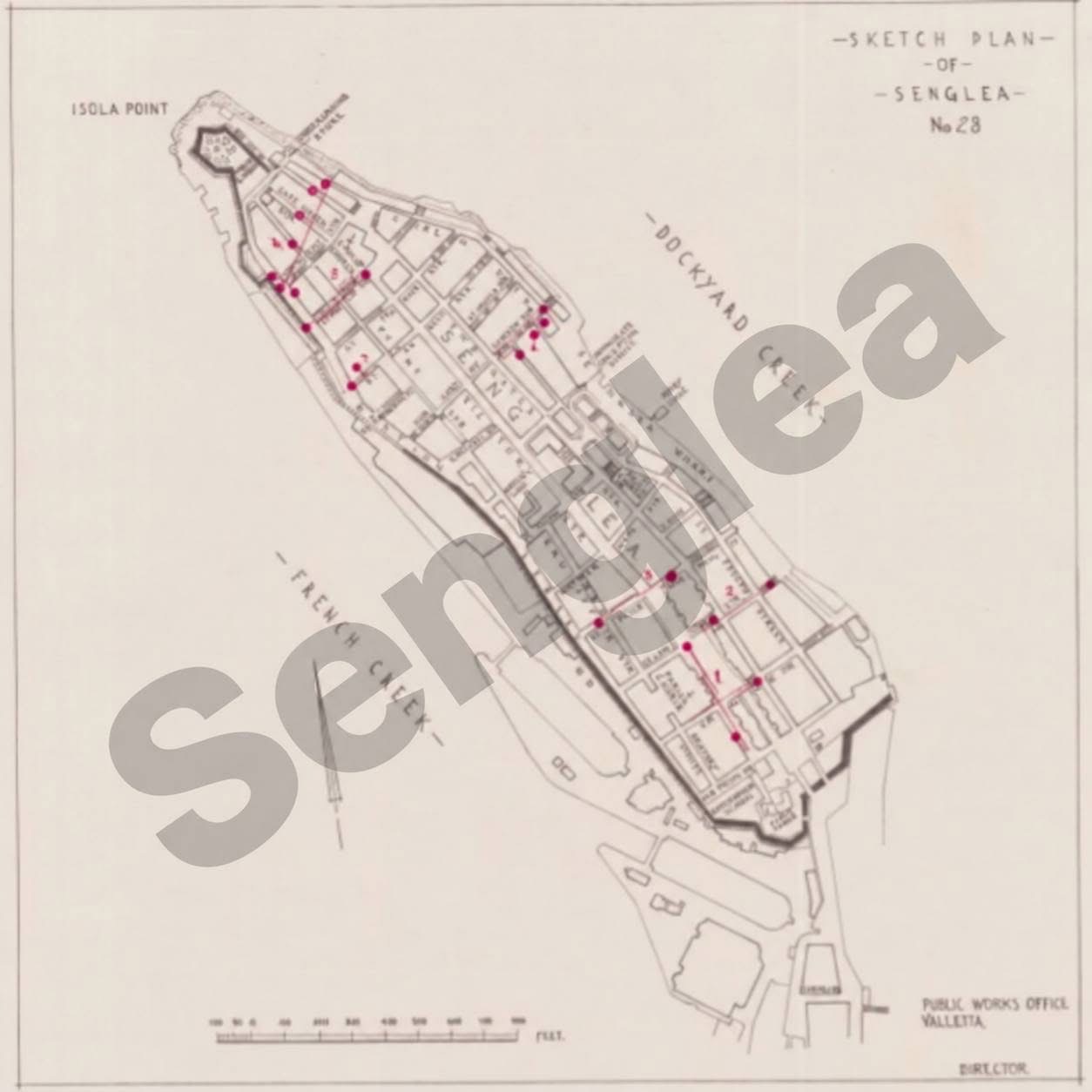
Sketch plan of Senglea with the 22 entry/ exit recorded points,
excluding the one at Point Battery
Construction and technical design: the Subterranean Network
The construction of these structures forms part of the great tradition of Mediterranean bastioned towns, where the local limestone could be cut, tunneled through and adapted as required. The tunnels were often dug into the bedrock, sometimes in a rudimentary manner, sometimes with a genuine focus on defensive or hydraulic organisation. In a compact and exposed area such as Senglea, every excavation had to balance stability, protection and functionality.
This underground logic did not apply solely to military tunnels. Cisterns, reservoirs and drainage systems were also part of the city’s hidden infrastructure, as water and sanitation were vital concerns in a besieged environment. Thus, the underground passages of Senglea were not intended for a single purpose: they form a hybrid system, at once military, hydraulic and urban.
The underground landscape of Senglea is characterized by two distinct historical eras:
- Knights-Era Tunnels: built primarily to defend the strategic Saint Michael Bastion. These tunnels spanned beneath the peninsula, featuring hidden exits leading directly to the sea to allow knights to execute surprise counterattacks or strategic retreats.
- World War II Shelters: because Senglea sat directly next to the vital Grand Harbour naval dockyards, it was a primary target for Luftwaffe bombing runs. The local population hand-dug complex networks of deep, narrow corridors underneath the city streets to serve as makeshift underground living quarters.
Uses over time
Underground Senglea (L-Isla) features a network of historic military tunnels and underground War II bomb shelters carved deep into the limestone bedrock beneath the fortified city. Originally engineered by the Knights of St John for defensive purposes, these spaces were massively expanded during the 20th century to protect residents from heavy aerial bombardments.
Indeed, over time, these spaces have changed their function. They have served as secret passageways, storage areas and refuges for residents during periods of insecurity. During War II, this protective role was reinforced: as in other parts of Malta, the underground shelters were used to provide protection from aerial bombardments. The underground network, originally designed for siege warfare, was thus adapted to modern warfare.
In Senglea, as in other fortified towns, civilian uses often coexisted with military ones. Some spaces were reused as drainage networks or as part of the town’s infrastructure, extending the useful life of the ancient excavations. This versatility explains the complexity of the town’s underground heritage: there is not a single network, but several layers spanning different eras and serving different functions.
An invisible heritage
Today, this heritage remains inaccessible or is even reinterpreted within broader tour itineraries dedicated to Malta’s underground heritage. Nearby, the Malta War Museum and the trails linked to the historic Cottonera reservoirs demonstrate how underground sites can be documented and showcased without being reduced to mere curiosities. The heritage value lies precisely in this historical depth: defense, survival, daily life, adaptation.
But not everything is on display in Senglea. Some sections have been preserved, others transformed, and several areas remain largely hidden from view for reasons of safety, town planning or the protection of the built environment. As is often the case in ancient cities, what remains underground represents a delicate balance between memory, maintenance and contemporary constraints.
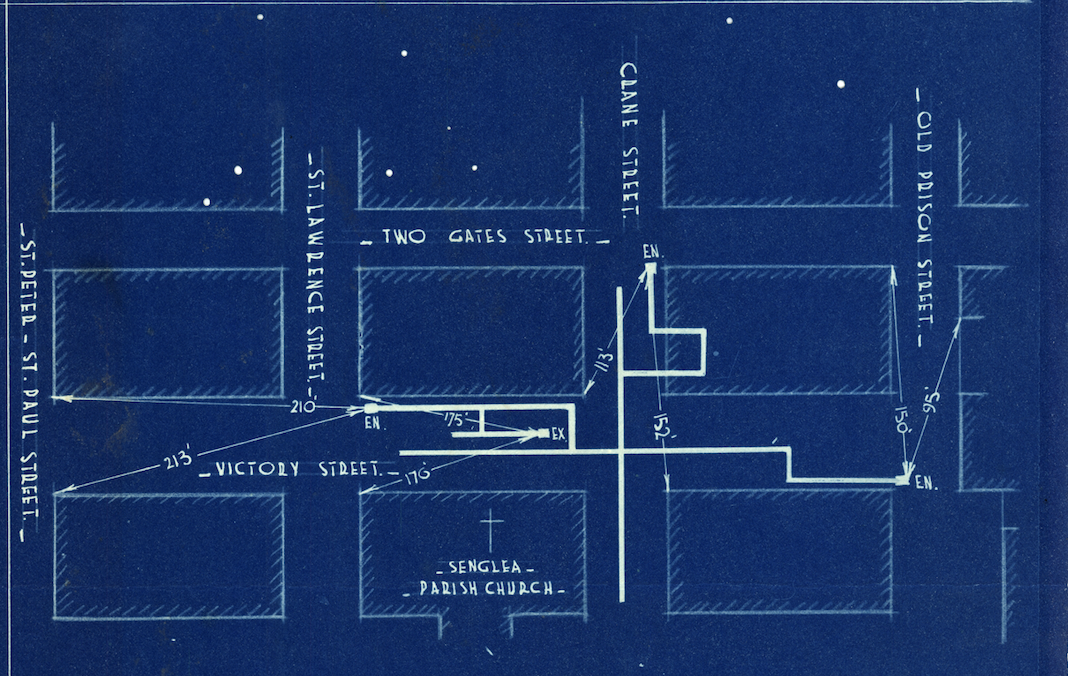
Shelters on Victory street.
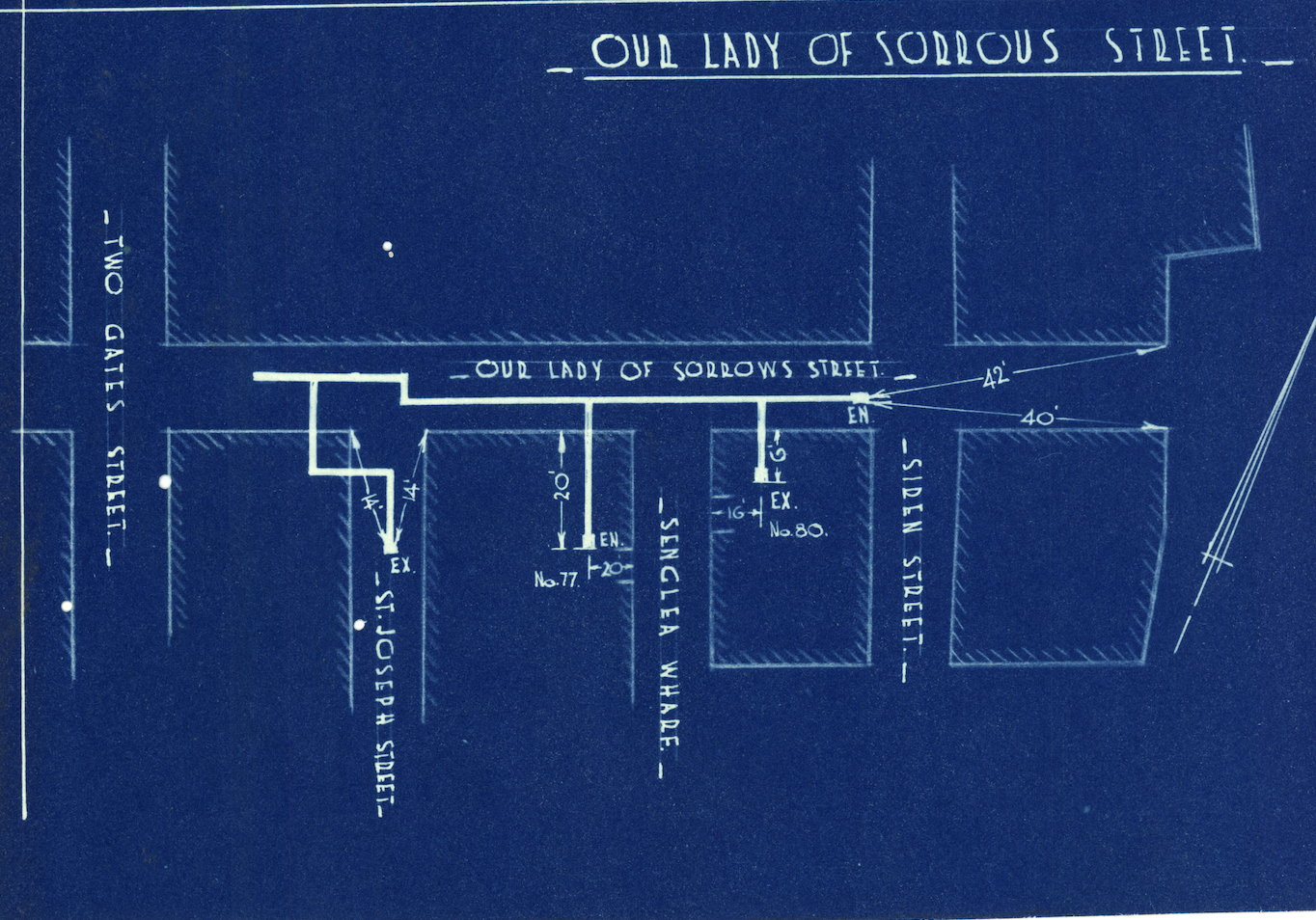
Shelters on Our Lady of Sorrows street.
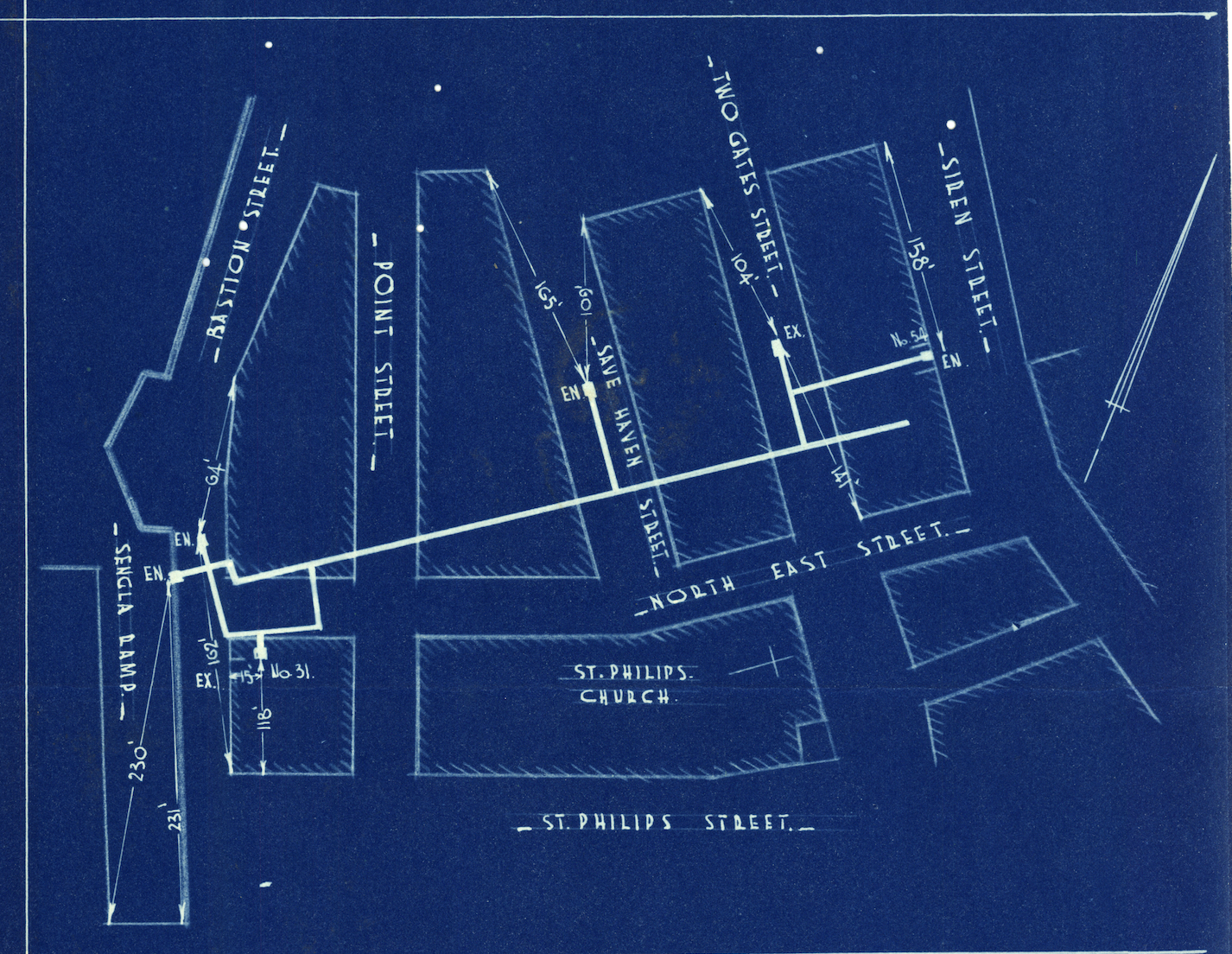
Shelters on North East street.
Blue prints, National Archives of Malta
Future prospects and current challenges
The future of the Senglea tunnels depends on two factors. On the one hand, there is heritage conservation, which involves research, restoration and the telling of their historical story. On the other hand, there is functional reuse, as seen elsewhere in Cottonera, where road tunnels have been restored and modernized whilst retaining their historical features. The example of the Għajn Dwieli tunnel in Cospicua shows that an ancient structure can remain useful whilst being protected.
For Senglea, the challenge is similar: to preserve the original defensive ingenuity whilst preventing the physical or narrative disappearance of these spaces. Their future undoubtedly lies in measured enhancement, combining historical research, targeted tours and respect for existing structures. In this sense, the underground passages of L-Isla are not merely a relic; they are a stone archive, still partially legible beneath the town.
Beneath Senglea, the tunnels tell a different story of the town: that of a fortress carved into the rock, designed to withstand, survive and adapt. Their journey, from military defense to heritage preservation, reflects the entire history of L-Isla.