Hidden inside St John's Co-Cathedral in Valletta are two of the most extraordinary works ever painted by Caravaggio. More than simple Baroque masterpieces, Saint Jerome Writing and The Beheading of Saint John the Baptist form a deeply spiritual and emotional dialogue exploring faith, sacrifice, redemption and human suffering.
Painted during Caravaggio's stay in Malta between 1607 and 1608, these masterpieces reveal both the genius of the artist and the turmoil of his personal life.
Caravaggio in Malta: A Painter in Exile
When Caravaggio arrived in Malta, he was a man on the run. After fleeing Rome following a murder charge, the Italian painter sought refuge with the Knights of St John. Malta became a turning point in his career, allowing him to continue painting while seeking protection and redemption.
It was during this turbulent period that he created his two monumental works for St John's Co-Cathedral in Valletta, today considered among the greatest artistic treasures in Malta.
Saint Jerome Writing: Faith, Knowledge and Solitude
Who Was Saint Jerome?
Saint Jerome lived between the 4th and 5th centuries and remains one of the most influential figures in Christian history. Born around 347 in Dalmatia - in the region corresponding today to Croatia and Bosnia-Herzegovina — he became:
• A priest
• A theologian
• A Church Father
• One of the great Doctors of the Latin Church
Saint Jerome is best known for translating the Bible from Hebrew and Greek into Latin, creating the famous Vulgate, which became the official biblical text of the Catholic Church for centuries.
A scholar and ascetic, he dedicated his life to studying Scripture, prayer and spiritual teaching.
Caravaggio's Vision of Saint Jerome
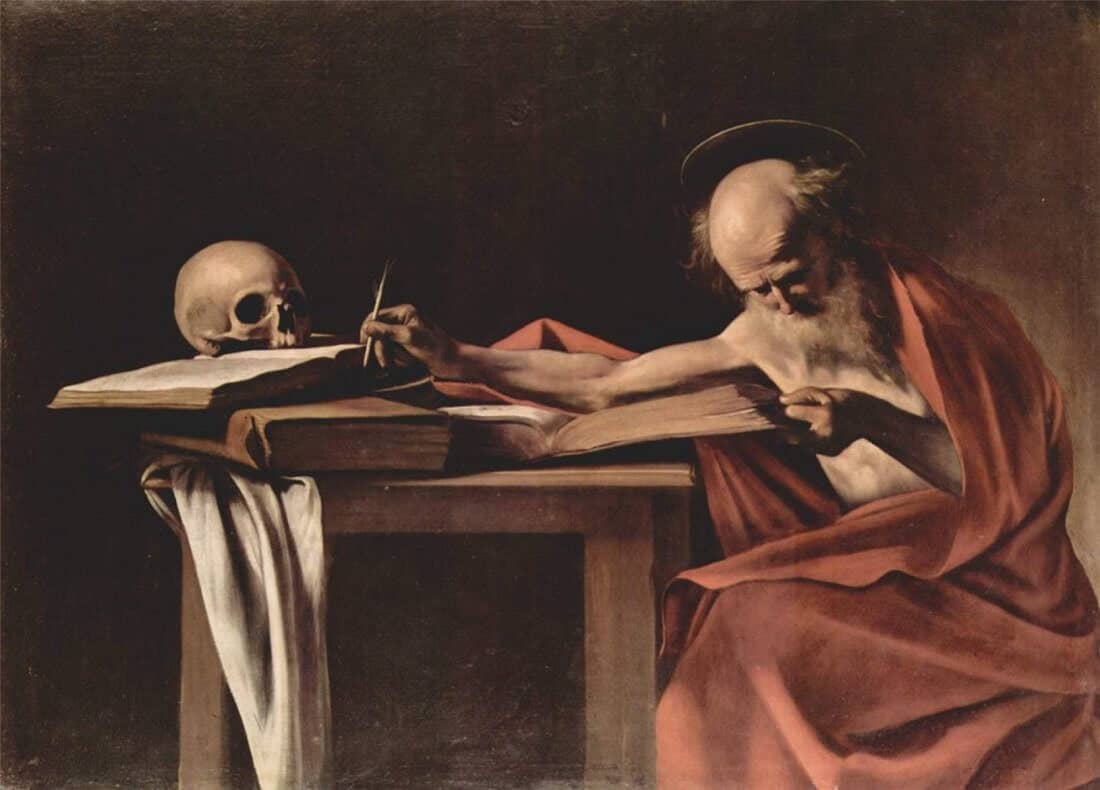
In Saint Jerome Writing, Caravaggio portrays the saint alone in a sparse and silent interior, completely absorbed in his work.
The painting focuses less on grandeur and more on inner contemplation:
• Aged skin and weary hands evoke the passing of time
• The minimal setting reflects spiritual simplicity
• Light and shadow intensify the atmosphere of meditation
Caravaggio transforms Saint Jerome into a symbol of intellectual devotion and spiritual discipline. The work celebrates the sacred power of knowledge, faith and solitude.
Far from theatrical excess, the painting expresses a profound idea: true greatness comes from inner truth rather than outward splendour.
The Beheading of Saint John the Baptist: Caravaggio's Most Powerful Painting
The Story of Saint John the Baptist
Saint John the Baptist was the prophet who announced the coming of Christ and baptised believers in the River Jordan.
According to the Gospels of Matthew and Mark, he was imprisoned and later executed after publicly condemning the marriage between Herod Antipas and Herodias, which he considered unlawful.
During a banquet organised for Herod's birthday, Herodias's daughter, traditionally identified as Salome, danced before the king. In return, she requested the head of John the Baptist on a platter. Bound by his oath, Herod ordered the execution.
A Monumental Scene of Martyrdom
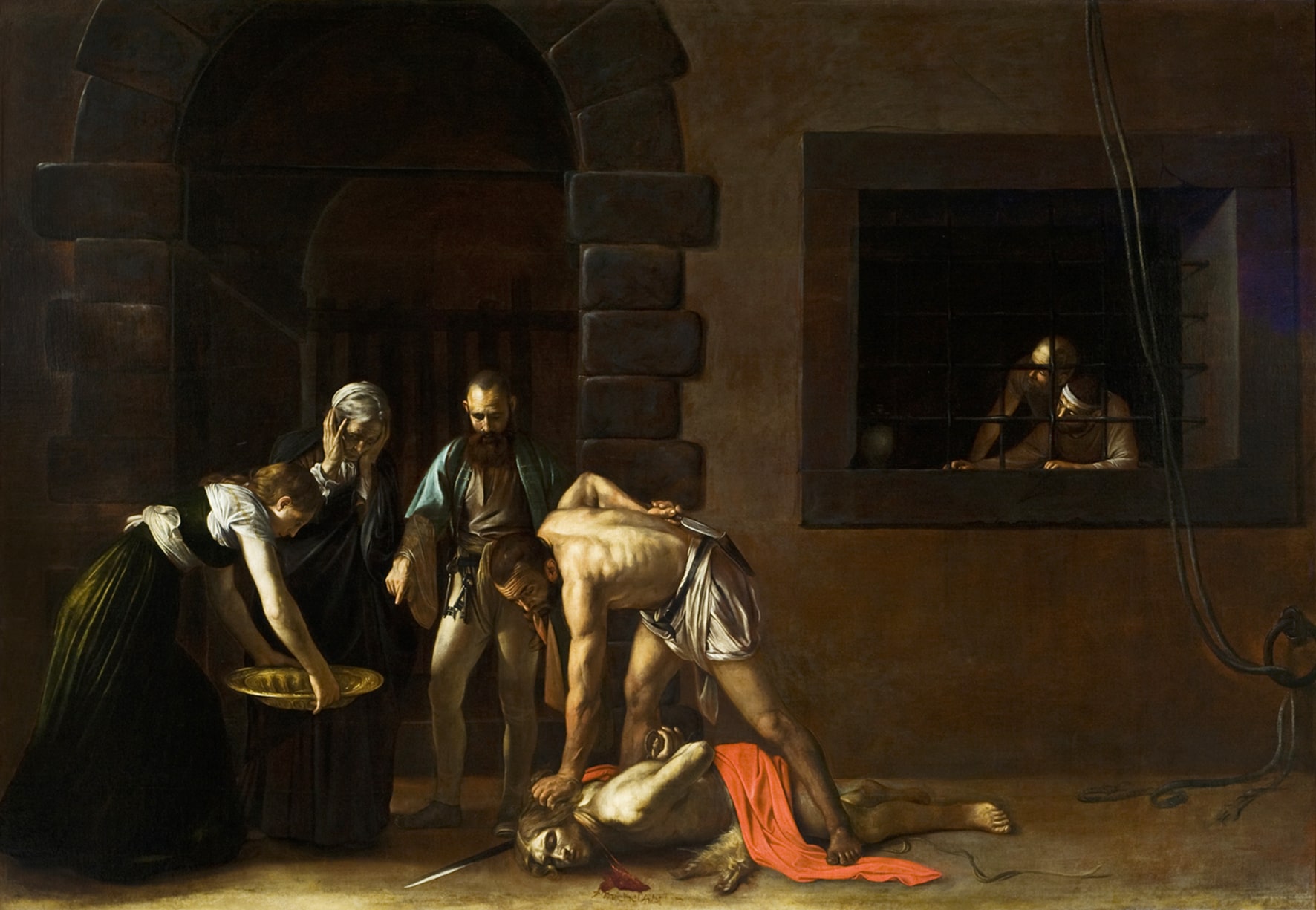
In The Beheading of Saint John the Baptist, Caravaggio captures the precise moment of execution.
Rather than glorifying martyrdom, the artist focuses on:
• Human violence
• Silence and tension
• The fragility of life
• The possibility of redemption
The composition is strikingly restrained. Shadows dominate the scene, amplifying the emotional intensity.
Painted specifically for the oratory of St John's Co-Cathedral, the artwork is also unique because it bears Caravaggio's only known signature — written in the blood flowing from the saint's throat. This detail alone has made the painting one of the most studied masterpieces in Baroque art history.
A Spiritual Dialogue Between the Two Paintings
Seen together inside St John's Co-Cathedral, these two works form a powerful artistic and spiritual conversation.
• Saint Jerome represents contemplation, study and the sacred word
• Saint John the Baptist represents sacrifice, truth and martyrdom
One writes. The other dies.
One withdraws into silence. The other confronts violence.
Together, the paintings reflect themes that deeply resonated with Caravaggio himself: guilt, isolation, redemption and spiritual struggle.
Caravaggio's Inner Turmoil Reflected in Malta
Caravaggio's Maltese period is often considered one of the darkest and most emotionally intense moments of his career. Exiled, pursued and haunted by his past, the painter projected much of his personal suffering into his religious works.
In Malta, his art became more stripped back, more human and more spiritual. Decorative flourishes disappear, replaced by dramatic realism and psychological depth. The result is an art form that feels startlingly modern even centuries later.
Visiting Caravaggio's Paintings in Valletta
Today, both masterpieces can still be admired inside St John's Co-Cathedral in Valletta, one of Malta's most important cultural landmarks. Beyond their artistic significance, these paintings offer visitors a rare opportunity to experience the emotional and spiritual intensity of Caravaggio's genius in the very place they were created.
For art lovers, history enthusiasts and travellers exploring Valletta, discovering Caravaggio's works remains one of the most unforgettable cultural experiences in Malta.