Senglea, 500 years of History (3/3)
In the aftermath of World War II, Senglea was no longer the city of dignitaries and intellectuals that it had been under British rule. The bombings had shattered its urban landscape, the elite had largely fled, and the docks dictated the rhythm of life both day and night.
For decades, the peninsula lived to the rhythm of sailors, dockers and labour struggles, against a backdrop marked by industrial development and political tensions. Then came the regeneration projects, the closure of the shipyards, the opening of a marina and the restoration of the seafront: little by little, Senglea has been transformed, becoming one of the most distinctive and exclusive destinations in the Grand Harbour.
The post-war period: a battered city struggling to rebuild
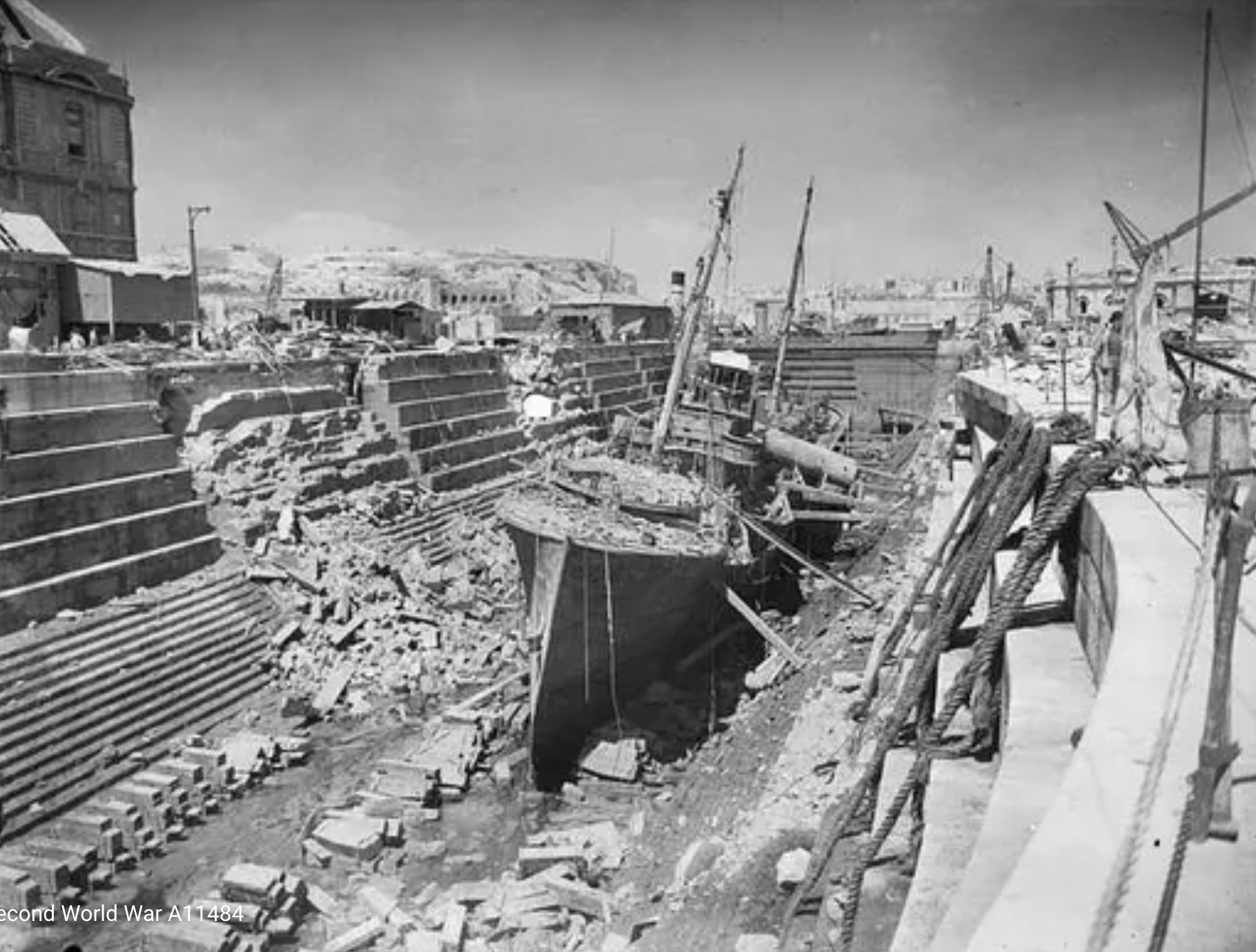
The shipyard after the bombing
At the end of the conflict, the immediate priority was to make the city habitable again. Residents returning from exile or from places of refuge found Senglea in ruins: streets torn apart, houses collapsed, churches damaged. The urgent need was a practical one: to rebuild the walls, repair the roofs, reopen the shops and reconnect the neighbourhoods with one another.
In this context, the reconstruction was rarely spectacular. It took place in small steps, depending on the resources available, the energy of families and the help of the authorities. The materials were modest, sometimes salvaged; building sizes changed and street layouts were simplified. The city's appearance emerged transformed, less uniform, more fragmented, yet still deeply rooted in its rocky peninsula.
This phase of repair left behind an urban structure blending surviving old buildings, emergency constructions and more recent additions. The scars of war, whether visible or invisible, became an integral part of the landscape.
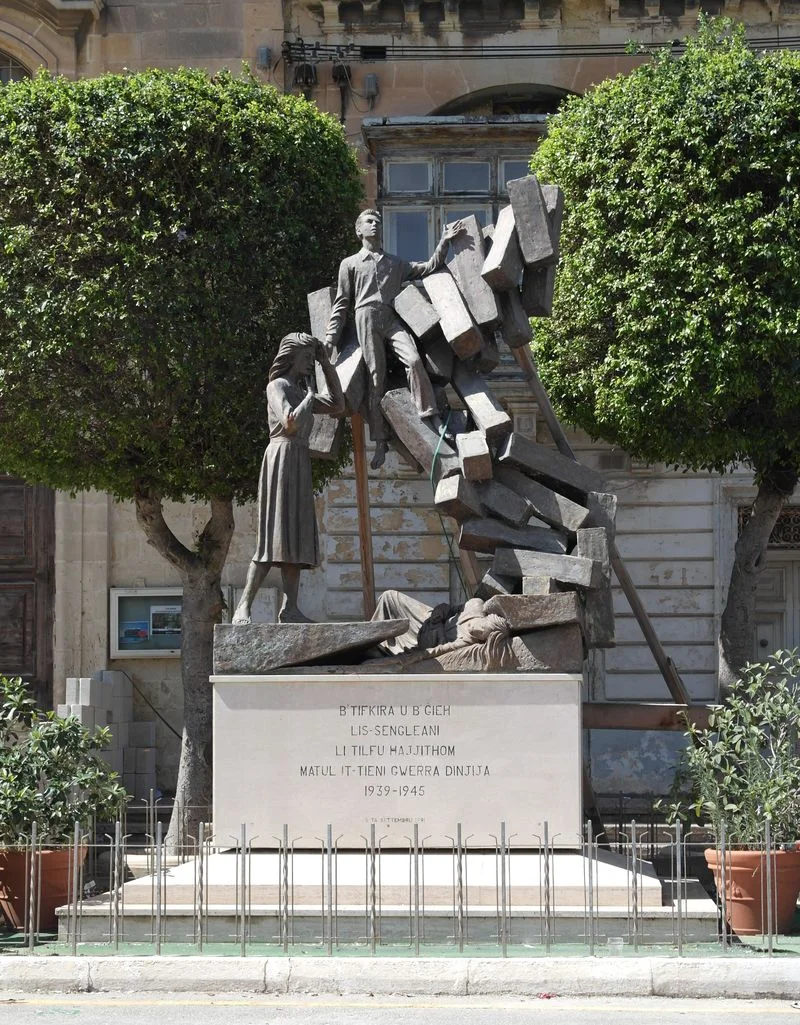
Senglea War Memorial
The exodus of the elite and the emergence of a dockers' culture
The post-war period saw a major social restructuring. Some of the wealthy families, prominent figures and intellectuals did not return to Senglea or only resettled there intermittently. The town lost a fraction of its middle class, who opted for newer neighbourhoods, less exposed to the nuisances of the port and the painful memory of the bombings.
In this relative vacuum, a different social structure emerged. Dockers, shipyard workers, sailors and their families took centre stage. Senglea became a working-class town in the full sense of the term: the day was governed by the dockyard's timetable, the nights by the ships' port calls, whilst the cafés and taverns were frequented by those who made their living from the sea and metal. Stories of shifts, wages, strikes and petty trafficking mingled with memories of the siege and the war.
The port is no longer just a backdrop; it is an economy, an identity, and a culture. People there talk about contracts, cargo, ship repairs, unions, and politics. Senglea has become one of the faces of working-class Malta, right on the waterfront.
Between smuggling, resourcefulness and everyday life
In this hard-working port city, resourcefulness is part of daily life. As in many major Mediterranean ports, not all trade is official, and informal activities sometimes supplement the income from the shipyard and small trades. The docks and alleyways are a hub of cargo, goods, impromptu deals, and stories that are whispered rather than written down.
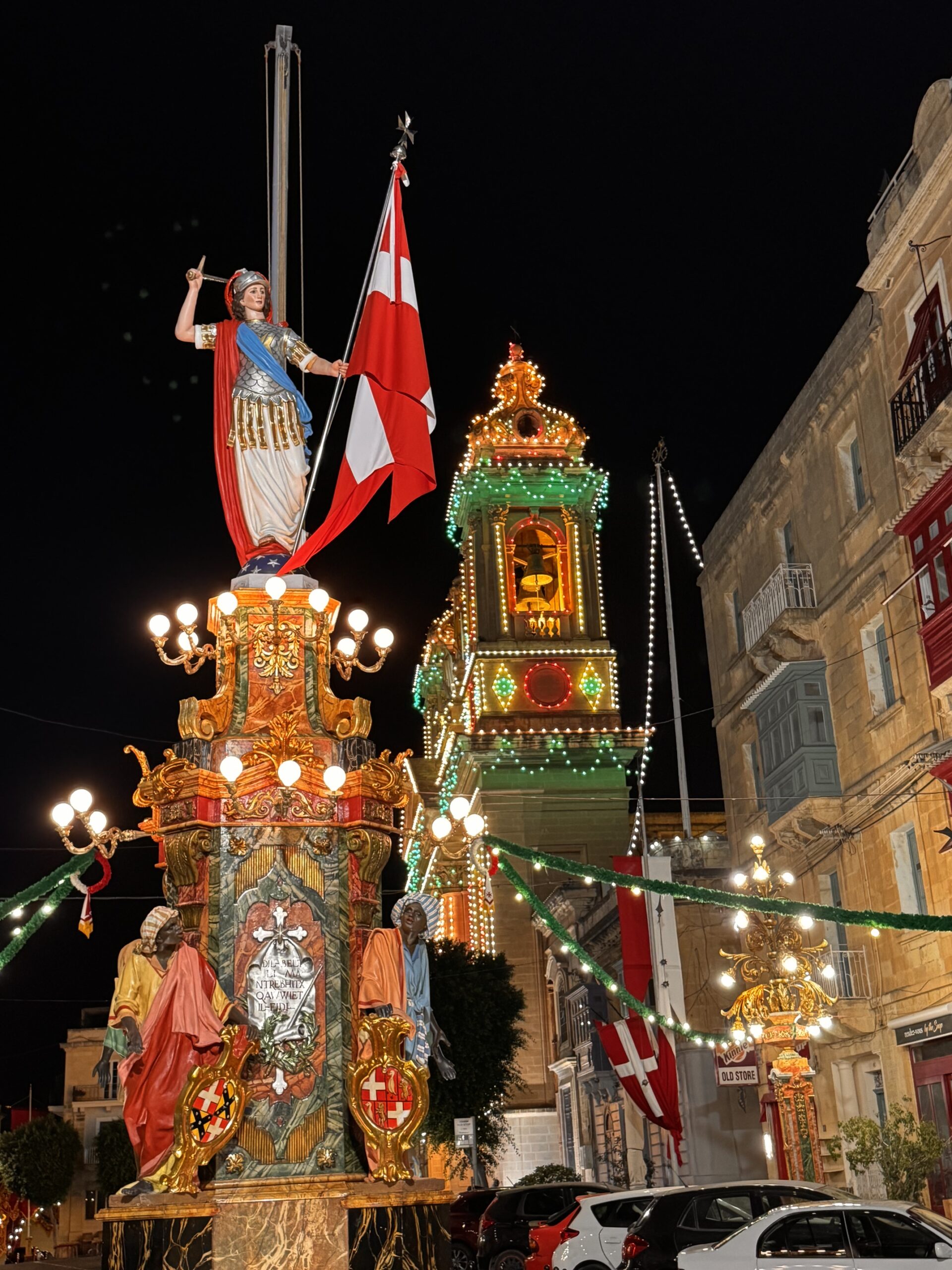
Daily life, meanwhile, is very much alive: cafés where people discuss football and political news, patron saint festivals where religious fervour meets neighbourhood spirit, balconies decorated with flags, voices carrying from one window to the next. Senglea's working-class identity is forged in this blend of economic hardship and social warmth, solidarity and rivalries, and pride in belonging to a port community.
To those coming from outside at that time, the city may have seemed raw, rough, yet intense. It did not yet have the veneer of a "destination": it was first and foremost a place to live and work, with its lights and shadows.
A Labour stronghold and the departure of the British: a city in political turmoil
This working-class culture naturally found an echo in the political arena. The shipyards, the unions, and the dockworkers became key players in major social struggles and debates surrounding independence, relations with Great Britain, and the country's future economic model.
Senglea, like other industrial towns, forged a reputation as a Labour stronghold, rooted in a culture of militant labour activism. Conversations in cafés and social clubs focused as much on wages and working conditions as on government policies, nationalisations, and planned closures. The gradual departure of the British, followed by the scaling back and eventual shutdown of the shipyard, created a period of intense tension: fear of unemployment, anger, hope for retraining, but also a sense of abandonment.
Amid this turmoil, the city had to reinvent itself. The nerve centre that had once sustained it, the shipyards serving an imperial fleet, was falling apart. Senglea found itself facing an economic and symbolic void that had to be filled in other ways.
The building that now houses La Macina was to become the headquarters of the Labour Party, whilst the building that now houses The Snop House was to become the Young Labour's social club.
Challenging redevelopment and early signs of revival
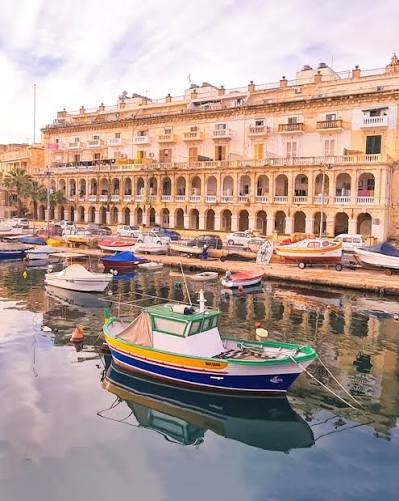
The redevelopment of the port and former industrial areas does not happen overnight. For years, the city remains marked by brownfields, underused buildings, and docks awaiting a new purpose. Daily life remains that of a modest city, with an economy in transition, social scars, and residents who are attached to their community but sometimes tempted to leave.
Yet, as the Grand Harbour area transforms, signs of a revival are emerging. Public authorities and private stakeholders are beginning to see these docks, views, and bastions as a resource for tourism and heritage. A few renovation projects are taking shape, the promenades are being cleaned up, facades are being restored, and the city's relationship with the sea is being revitalised.
Where for a long time only docks and derelict lots were visible, people are now beginning to see the potential for promenades, a marina, fine dining, and small hotels. Senglea, though not yet fully aware of it, stands on the threshold of a new transformation.
Marina, restaurants and new venues: the peninsula is taking on a new look
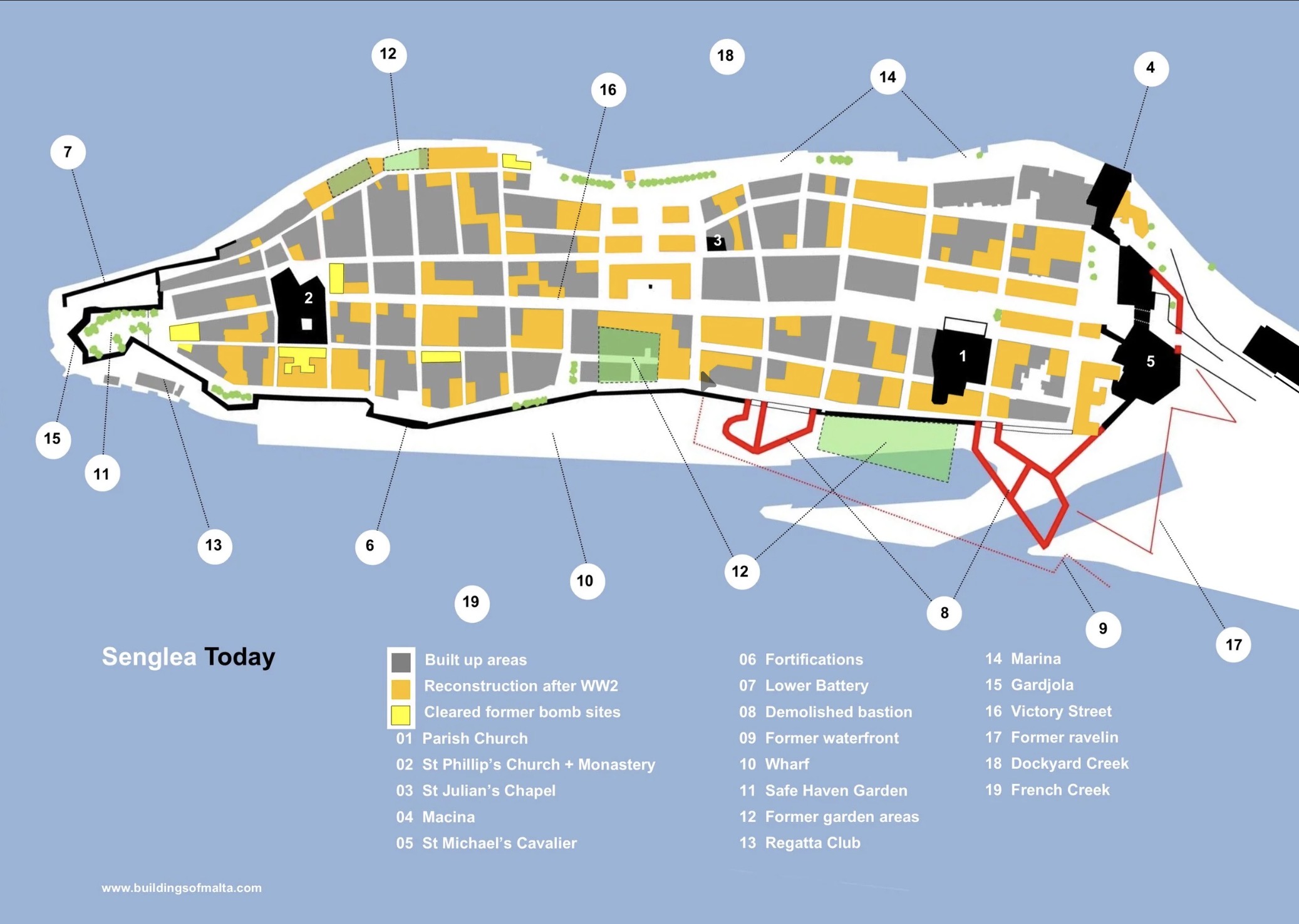
Map: buildingsofmalta.com
The creation of a marina on the Birgu side and the revitalisation of the seafront mark a decisive turning point. The quays are now filled with pleasure boats, yachts and sailing boats. The port's industrial skyline is becoming less imposing; the dominant sounds are no longer just those of the shipyards, but also the lapping of the waves, the clinking of masts and the chatter from the terraces.
Around this new hub, restaurants, cafés and small bars are springing up, offering Maltese cuisine, fish dishes and Mediterranean wines. Old houses are being restored, sometimes converted into flats for residents or guesthouses for travellers. The narrow streets that once led workers to the dockyard now guide visitors to viewpoints, gardens and hidden gems.
The city remains true to its human scale: no large complexes, few big hotels, but a constellation of intimate spots where one can feel the blend of down-to-earth authenticity and understated refinement.
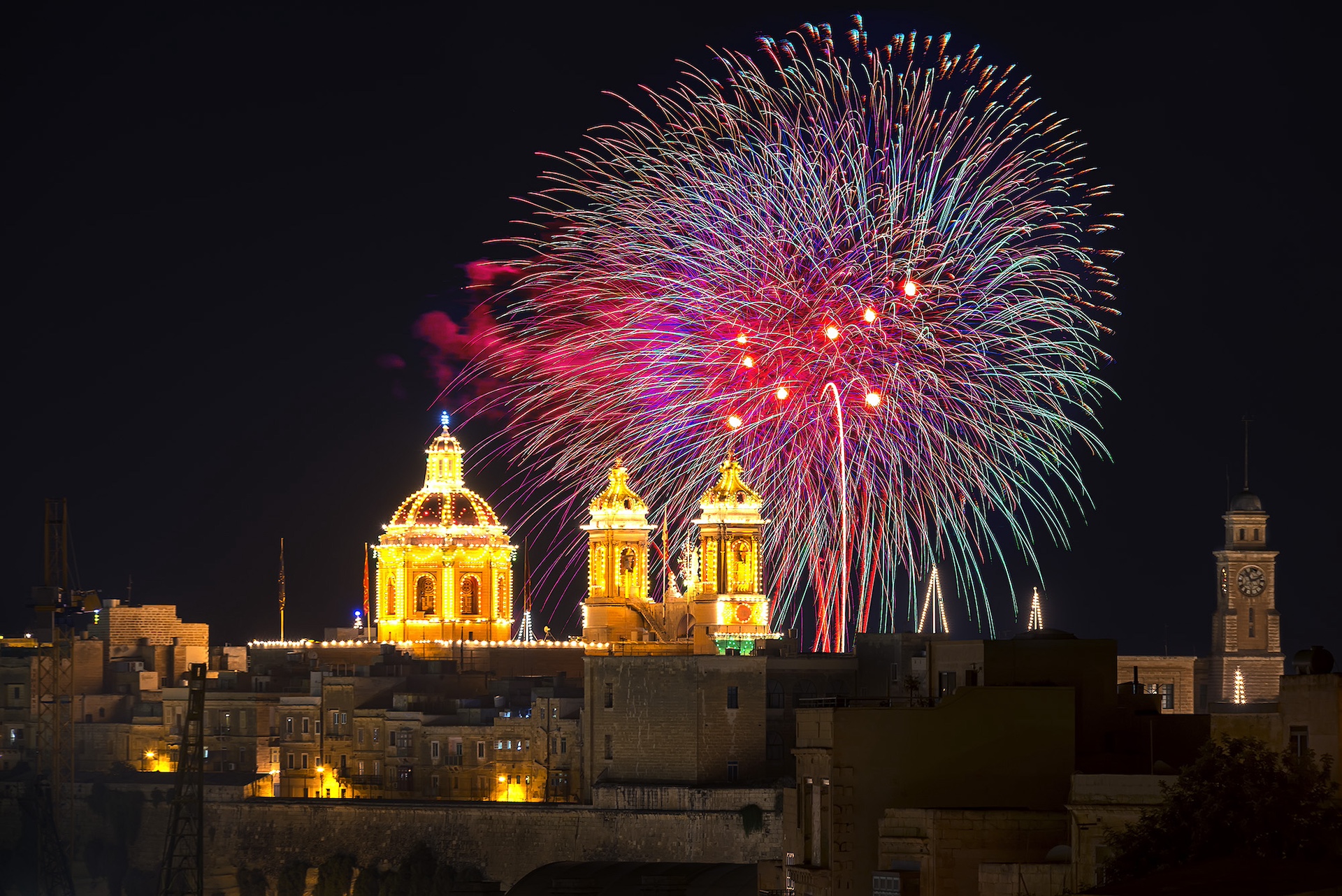
Senglea today: a hidden gem
Today, Senglea stands out as one of Malta's most distinctive destinations. It does not seek to rival the major seaside resorts or the constant spectacle of Valletta. It offers something else: an immersion in a city that has seen it all (the Knights, the British Empire, the bombings, the dockyards, the turbulent years) and which now offers a peaceful setting, without having erased its history.
Travellers attuned to the spirit of a place will find it an ideal destination. Here, you can stroll along the seafront, sip a drink whilst gazing at the yachts, lose yourself in narrow streets where votive niches stand alongside restored doorways, and make your way down to the Gardjola Gardens to take in the view of the Grand Harbour and the skyline of Valletta. The town still retains its local population, its Maltese voices and its neighbourhood traditions, which prevent it from becoming an empty backdrop.
In this new chapter, charming guesthouses such as The Snop House play a discreet yet essential role. They offer a way to experience Senglea first-hand, to feel the texture of its walls, the softness of its light and the depth of its history. The former working-class stronghold, which for so long faced the sea out of necessity, now turns towards the sea by choice: to share a Mediterranean way of life, nourished by centuries of history, with those who come to stay.
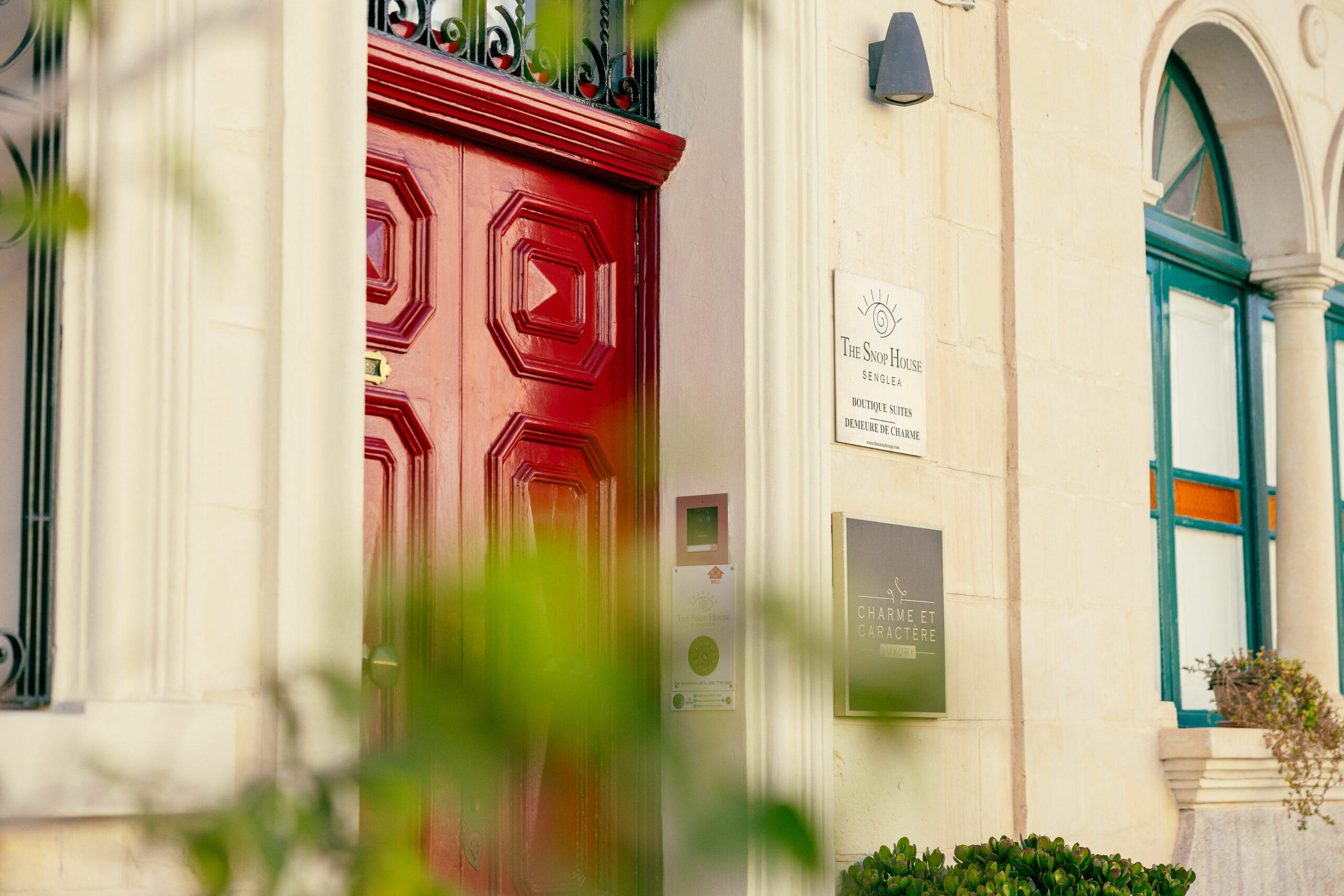
Photo: Martin Sicklar