Along the shores of the Maltese Islands, salt does far more than season food: it tells a story of sea, limestone, sunshine and patience. Across Malta and Gozo, traditional salt pans carved directly into the coastal rock have been used for generations to transform Mediterranean seawater into sea salt. Water passes through a network of shallow basins before gradually evaporating under the sun, leaving behind delicate white crystals ready to be harvested.
Among the most spectacular examples are the Xwejni salt pans in Gozo, whose geometric patterns stretch along the island's northern coast. For travellers exploring Gozo, these salt pans offer more than a beautiful landscape. They are part of a living Maltese tradition, shaped by the Mediterranean and preserved through generations of local knowledge.
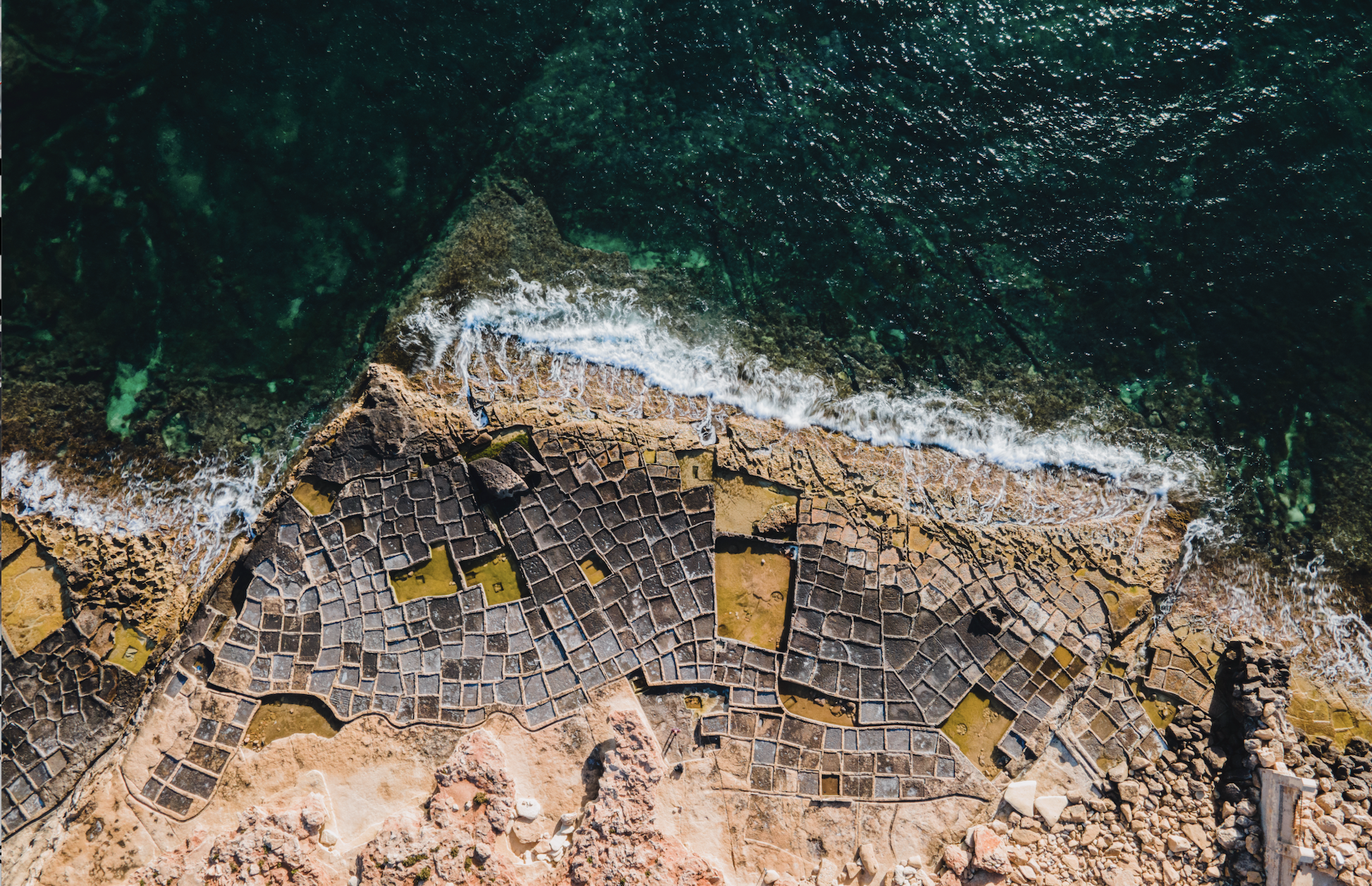
photo Christopher Kane
Where are the salt pans in Gozo?
Some of the most famous salt pans in Gozo are located on the island's northern coast, around Xwejni Bay, near Marsalforn. Here, hundreds of rectangular basins carved into the limestone form a remarkable chequerboard beside the Mediterranean. Narrow channels, shallow pools and low stone edges create an almost abstract landscape extending along the coastline.
The Xwejni salt pans have consequently become one of Gozo's most distinctive sights and an especially popular location for photography. Depending on the time of day, the shallow pools reflect the deep blue of the Mediterranean or take on shades of silver, ochre and gold. At sunrise and sunset, the changing light completely transforms the landscape.
Yet their beauty should not obscure their original purpose. The Gozo salt pans are not simply a tourist attraction: they remain part of a centuries-old method of producing traditional Maltese sea salt.
How do the Gozo salt pans work?
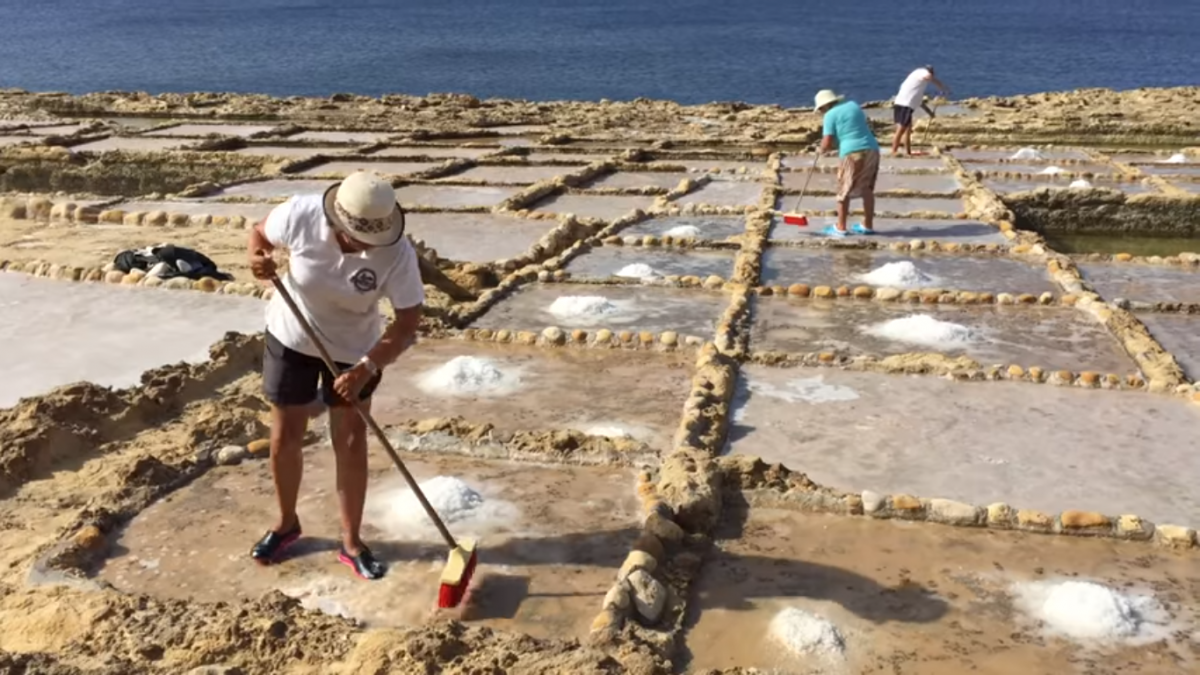
The process behind traditional salt harvesting in Malta and Gozo is remarkably simple, but it requires detailed knowledge of the sea, weather and landscape. Seawater is first directed into pools and channels carved into the coastal limestone. The natural shape and slope of the rock help move the water through the system, while waves and coastal conditions have traditionally played an important role in filling the pans. The water is then distributed between settling and evaporation pools.
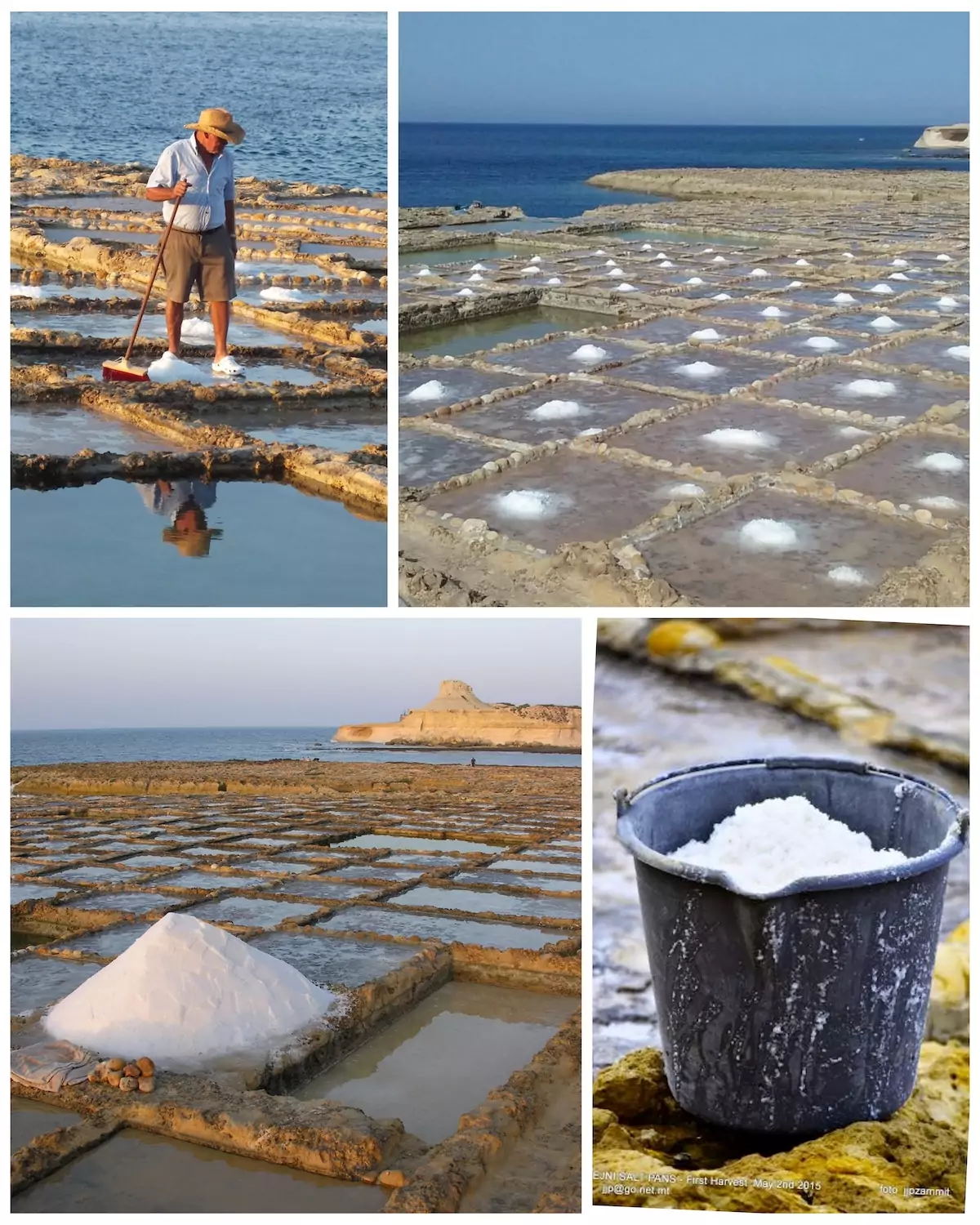
From this point, nature performs much of the work. During the hot, dry Mediterranean summer, the combination of sunshine, heat and wind gradually evaporates the seawater. As the amount of water decreases, the concentration of salt increases until crystals begin to form. The salt can then be harvested, traditionally by hand, before being dried, sorted and stored
It is a slow process governed by the weather. Salt production cannot simply be accelerated: the rhythm of the harvest remains closely connected to the sea and the Maltese summer.
A centuries-old salt-making tradition in Malta
Salt production in Malta has a long history, reflecting the importance this natural resource once held throughout the Mediterranean. Before modern refrigeration, salt was essential for preserving food, making it far more than an everyday seasoning. It was a valuable commodity that could be stored, transported and traded.
Over the centuries, Malta's strategic location in the Mediterranean made salt part of a wider network of local production and commerce. In Gozo, families have maintained salt pans and passed knowledge of their operation from one generation to the next. Understanding when to fill the pans, how to manage the water and when the salt is ready to harvest requires experience and close attention to weather conditions.
This traditional knowledge remains one of the most fascinating aspects of Gozo's salt-making heritage.
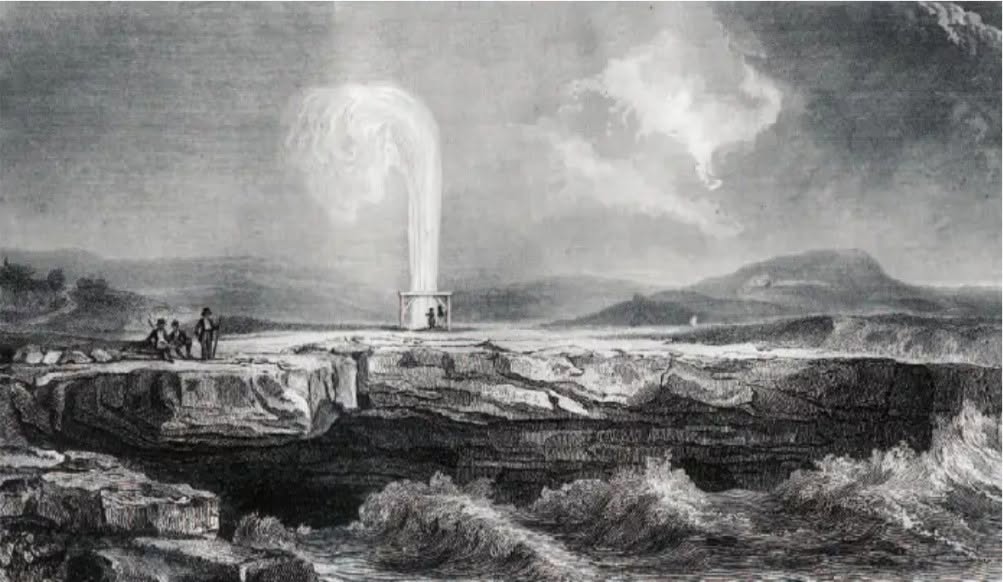
Saltwater GEYSER in the mid-1700s
copyright Malta Underground
What makes Maltese sea salt special?
Maltese sea salt is intimately connected to the natural environment in which it is produced. The Mediterranean provides the seawater, the coastal limestone shapes the evaporation pools, while Malta's intense summer sunshine and wind allow the water to evaporate naturally. The resulting crystals are associated with small-scale, traditional production and a direct connection to the Maltese landscape.
For visitors interested in Maltese food and local products, sea salt offers one of the simplest ways to experience this relationship between landscape and cuisine. It can be used on fresh fish, grilled vegetables, tomatoes and salads, or simply sprinkled over bread with olive oil. A few crystals are enough to evoke something quintessentially Mediterranean: sea air, warm limestone and food prepared with simplicity.
Maltese sea salt: a traditional souvenir from Malta
For travellers looking for an authentic souvenir from Malta or Gozo, locally harvested sea salt is both simple and meaningful. Unlike a purely decorative souvenir, it is something that can become part of everyday life after returning home.
Its connection to the landscape also makes it particularly evocative. A small packet of traditional Maltese salt carries with it the story of the island's coastline, the summer sun and generations of salt workers. It also makes an original local gift for anyone interested in Mediterranean cooking.
Rather than merely taking home an image of Malta, you can quite literally take home a taste of the islands.
Maltese sea salt at The Snop House
At The Snop House, Maltese sea salt naturally finds its place at the breakfast table. Used alongside the savoury dishes served in the morning, it offers guests a taste of one of the archipelago's most elemental ingredients before setting out to explore Malta and Gozo.
This simple ingredient reflects the philosophy of experiencing the Maltese Islands through their landscape, traditions and local products. From the coastline of Gozo to the breakfast table in Senglea, salt creates a small but meaningful connection between the places guests discover and the flavours they encounter during their stay.
Salt and desalination in Malta
Salt also plays another, less visible role in modern Malta. As an island nation with limited natural freshwater resources, Malta relies significantly on seawater desalination to produce water suitable for everyday use.
During desalination, freshwater is separated from the salts and minerals naturally present in seawater. This process leaves behind a more concentrated saline solution known as brine, which must be carefully managed when returned to the marine environment. Depending on factors such as currents, dilution and the sensitivity of nearby habitats, concentrated brine can affect local marine conditions. This modern reality creates an interesting contrast with Malta's traditional salt pans.
In one case, salt is deliberately collected from seawater through a slow process involving sunshine and evaporation. In the other, it is separated from seawater as part of an essential technology designed to provide freshwater to the islands.
Both, however, demonstrate how closely life in Malta remains connected to the Mediterranean Sea.
How to visit the Gozo salt pans responsibly
The Gozo salt pans are a living heritage site, and visitors should remember that some areas continue to be used for salt production. Walking directly through working salt pans can damage them or interfere with the harvesting process. The best way to experience the site is therefore to observe the pools from appropriate paths and surrounding areas and respect any signs or instructions from local salt producers.
The landscape itself is also exposed to natural pressures including storms, coastal erosion and changing environmental conditions. Protecting the salt pans means preserving not only an unusual coastal landscape but also the traditional knowledge associated with them.
Why visit the Xwejni salt pans in Gozo?
For travellers looking for things to see in Gozo, the Xwejni salt pans reveal a side of the island that is simultaneously beautiful, practical and deeply rooted in local history. Their geometric shapes create one of the most unusual coastal landscapes in the Maltese Islands, while the traditional salt harvest demonstrates how generations of Gozitans have worked with the Mediterranean environment. They are not monuments in the conventional sense. They remain places of work, shaped by the sea and maintained through human knowledge. And perhaps that is precisely what makes the Gozo salt pans so memorable.
Facing the Mediterranean, among limestone pools filled with changing reflections, they show how one of Malta's simplest ingredients can carry centuries of history. Sometimes, an entire landscape can be held in a handful of salt.